So, you’ve noticed a fine white powder settling on your furniture and electronics. It seems to be coming from your humidifier, and you’re wondering what’s up with that. This white dust from humidifier situation is pretty common, especially if you’re using tap water. It’s basically minerals from the water getting dispersed into the air.
Don’t worry too much, though. We’ll break down why this happens and what you can do to clean it up or stop it from happening in the first place. It’s not usually a big health deal for most people, but it can be a nuisance and might bother those with allergies or breathing issues.
Key Takeaways
- The white dust from your humidifier is usually minerals, like calcium and magnesium, from tap water.
- Ultrasonic and impeller humidifiers are most likely to produce this white dust.
- Using distilled water or a demineralization cartridge can significantly reduce or eliminate the white dust.
- While generally not harmful, white dust can irritate those with allergies or respiratory conditions.
- Regular maintenance of your humidifier and ensuring good home ventilation helps manage dust and maintain atmospheric quality.
Understanding The White Dust Phenomenon
What Constitutes Humidifier White Dust?
Ever notice a fine, powdery residue settling on your furniture or electronics after running your humidifier? That’s what most people call “white dust.” It’s not some mysterious mold or a sign of a dirty house, really. It’s primarily made up of the minerals that were dissolved in the water you used. When your humidifier releases moisture into the air, these minerals get dispersed too.
As the water evaporates, the minerals are left behind as tiny, dry particles. Think of it like salt drying on a surface after a splash of saltwater. It’s a common occurrence, especially with certain types of humidifiers, and while it might be a bit of an eyesore, it’s usually not a major health concern for most folks.
The Role Of Minerals In White Dust Formation
The main culprits behind this white dust are minerals like calcium and magnesium, which are naturally present in tap water. The harder your water is, the more minerals it contains, and consequently, the more white dust your humidifier might produce.
These minerals aren’t inherently bad but when they become airborne and settle around your home, they create that dusty film. It’s a direct result of the water’s composition. If you live in an area known for hard water, you’re more likely to encounter this issue. It’s a simple chemical process: water evaporates, minerals stay.
Which Humidifier Types Produce White Dust?
Not all humidifiers are created equal when it comes to producing white dust. The types most prone to this are ultrasonic and impeller humidifiers. These models work by using high frequency vibrations (ultrasonic) or a rapidly spinning disc (impeller) to break water into a fine mist.
This mist is then released into the air. Because they don’t filter out the minerals, these dissolved solids get sent out with the mist. Other types, like evaporative humidifiers, use a wick and fan system, which tends to trap more minerals, or warm mist humidifiers that boil water, leaving minerals behind in the heating element. So, if you have an ultrasonic or impeller unit, you might be more familiar with the white dust phenomenon.
It’s a trade off for the quiet operation these models often provide. If you’re looking to avoid this, you might consider looking into evaporative humidifier options.The amount of white dust you see often correlates directly with the mineral content of your tap water. Hard water means more minerals, which indicates more potential for white dust to appear on your surfaces.
Why Your Humidifier Creates White Dust

So, you’ve got this fine, powdery white stuff showing up on your furniture, your TV screen, maybe even your plants. It seems to appear out of nowhere, and you’ve probably figured out it’s linked to your humidifier. But why exactly does this happen? It all comes down to the water you’re using and how certain humidifiers work.
The Impact Of Hard Water On Humidifier Output
If you live in an area with hard water, you’re more likely to see this white dust. Hard water just indicates that the water has a lot of dissolved minerals in it, like calcium and magnesium. When you fill your humidifier with this type of water, those minerals go right in too.
Think of it like this, the humidifier is designed to put moisture into the air, but it can’t separate the minerals from the water. So, as the water turns into a fine mist and evaporates, the minerals are left behind. They’re too small to be seen individually but together they form that noticeable white residue on surfaces around your home.
Mineral Content And Its Effect On Dust
The more minerals in your water, the more white dust you’ll likely get. It’s a pretty direct relationship. If your tap water is particularly hard, your humidifier will have more mineral content to disperse. This means a thicker layer of dust can build up over time. It’s not really the humidifier’s fault; it’s just doing its job of dispersing water, minerals and all. Some people even notice that the dust is heavier after a particularly dry spell when the humidifier has been running more often.
Ultrasonic And Impeller Humidifier Mechanisms
It’s important to know that not all humidifiers create this white dust. The main culprits are usually ultrasonic and impeller humidifiers. These types work by using a small metal diaphragm that vibrates at a very high frequency (ultrasonic) or a rapidly spinning disc (impeller) to break water into tiny droplets, creating a cool mist.
This mist is then blown into the room. Because this process doesn’t involve heating the water, the minerals remain suspended in the mist. When the mist hits the air and evaporates, the minerals are left behind. Other types, like evaporative humidifiers, use a wick filter to draw water up and then a fan blows air through the wet wick, causing evaporation. This method tends to trap most of the minerals in the filter, so less (or no) mineral dust gets into the air.
The white dust itself is primarily composed of calcium and magnesium carbonates, which are common mineral deposits found in tap water. While generally considered harmless for most people, it’s a clear indicator of the mineral content in your water supply and the kind of humidifier you’re using.
Addressing The White Dust From Humidifier Issue

So, you’ve noticed that powdery white stuff settling on your furniture and electronics. It’s a common annoyance, especially if you’re using certain categories of humidifiers. The good news is, you don’t have to just live with it. There are several straightforward ways to tackle this white dust problem and get back to enjoying purified air.
Switching To Distilled Water For Your Humidifier
This is probably the simplest and most effective first step. Tap water, especially if you have hard water, is loaded with minerals like calcium and magnesium. When your humidifier disperses this water into the air as a fine mist, these minerals get left behind as they dry, creating that tell tale white dust.
Switching to distilled water indicates that you’re using water with virtually no minerals. This directly cuts off the source of the white dust. While it might seem like a small change, it makes a huge difference. You’ll need to remember to pick up distilled water on your grocery runs, but it’s a small price to pay for a dust free home. It’s a good idea to check your humidifier’s manual to see if it recommends specific water varieties, but distilled is almost always a safe bet for reducing mineral output.
Utilizing Demineralization Cartridges
If you’re not keen on lugging home gallons of distilled water every week, or if your water is exceptionally hard, a demineralization cartridge might be your best friend. These little gadgets are designed to fit inside your humidifier’s tank and work by trapping the minerals before they can be dispersed into the air. Think of them as tiny mineral sponges. They significantly cut down on the white dust output.
The effectiveness can vary depending on the cartridge and your water’s mineral make up, but many people find them to be a game changer. You’ll need to replace these cartridges periodically, so keep an eye on the manufacturer’s recommendations for how often that needs to be done. It’s a good way to keep your humidifier running smoothly and reduce the need for constant wiping down of surfaces.
Considering An Evaporative Humidifier
Sometimes, the best solution is to change the equipment itself. If white dust is a persistent headache, you might want to look into evaporative humidifiers. Unlike ultrasonic or impeller models, which generate mist by vibrating water at high speeds or using a spinning disc, evaporative humidifiers work differently.
They use a wick filter that absorbs water, and then a fan blows air through the wet filter, causing the water to evaporate naturally into the room. Because the water evaporates rather than being dispersed as a fine mist, the minerals are left behind in the filter, not in your air or on your furniture. This indicates no white dust! Evaporative models are also great because they tend to be self-regulating, indicating that they won’t over humidify your space, which can lead to other issues like mold growth.
While they might be a bit noisier than other kinds, the benefit of no white dust is often well worth it for many homeowners. If you’re looking for a long term fix, this is definitely something to consider for better air quality. Dealing with white dust often comes down to managing the water you use and the categpry of humidifier you have. Simple changes like switching water varieties or using a demineralization cartridge can make a big difference. If the problem persists, an evaporative humidifier might be the most effective solution for keeping your home free of that powdery residue.
Potential Health And Home Impacts
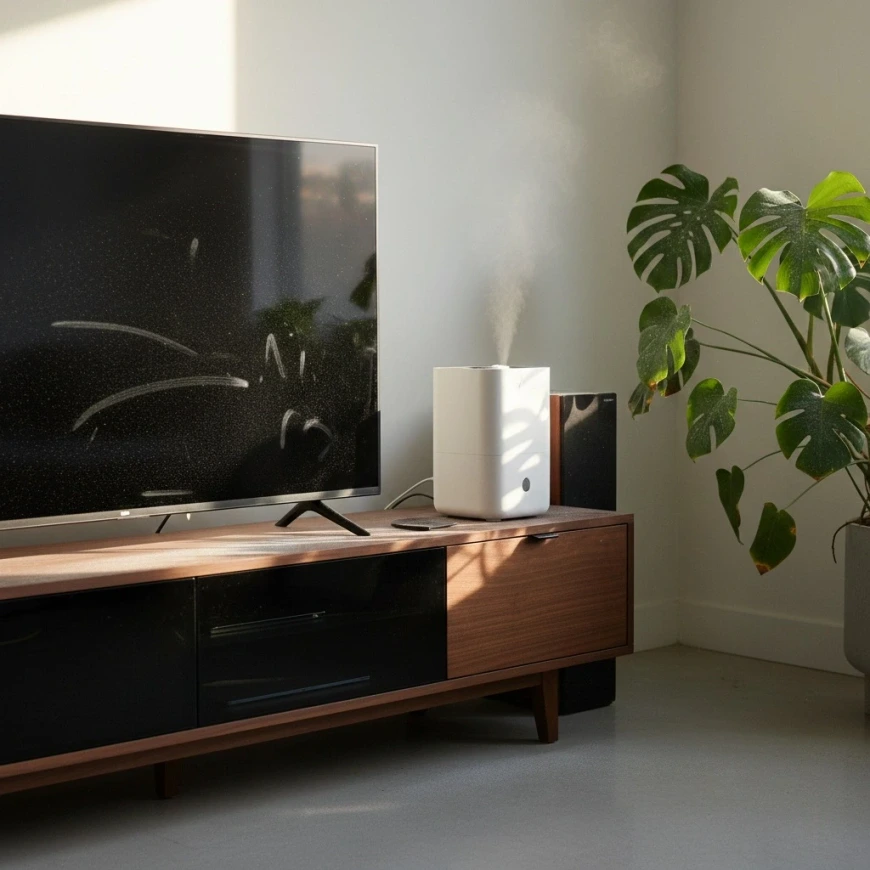
So, you’ve got this white dust floating around from your humidifier. It’s mostly minerals, like calcium and magnesium, from your tap water. While it’s generally not a major health hazard, it’s not exactly ideal for your living space either. Think of it as a constant reminder that your water might be a bit too hard for your humidifier’s liking.
Respiratory Sensitivity To Airborne Particles
Even though the minerals themselves aren’t usually harmful, breathing in any fine particles can be a problem for some folks. If you or someone in your household has sensitive lungs, allergies, or asthma, these airborne mineral particles could potentially trigger symptoms. It’s like adding extra dust to the air, and nobody wants that, right? It can lead to things like a scratchy throat, stuffy nose or just general irritation. The key is to keep the air quality in your home as clean as possible.
Aggravation Of Allergies And Asthma Symptoms
For those already dealing with allergies or asthma, that humidifier dust can be a real nuisance. It can make existing symptoms worse, leading to more frequent coughing, wheezing, or shortness of breath. It’s not that the dust causes these conditions, but it can certainly make them harder to manage. Keeping humidity levels balanced is important, and you can find more information on maintaining home humidity below 50% here.
Impact On HVAC Systems And Filters
This white dust isn’t just settling on your furniture; it can also make its way into your home’s heating and cooling system. Over time, these mineral deposits can build up on your HVAC filters, making them less effective. This means your system has to work harder to circulate air, which can lead to decreased efficiency and potentially higher energy bills.
It can also clog up the filters faster, meaning you’ll be replacing them more often. It’s a good idea to check your HVAC filters regularly, especially if you notice a lot of white dust around.
While the white dust itself is mostly harmless minerals, it’s a sign that your humidifier is working in a way that can affect your indoor air quality and potentially your home’s systems. Addressing the source of the dust is the best approach.
Here’s a quick rundown of what to watch out for :
- Respiratory Irritation : Dry throat, itchy eyes, or a stuffy nose.
- Allergy/Asthma Flare ups : Increased coughing, wheezing, or difficulty breathing.
- HVAC Issues : Clogged filters, reduced efficiency and higher energy use.
Maintaining Your Humidifier For Cleaner Air

So, you’ve got this white dust situation under control, which is great. But honestly, keeping your humidifier running smoothly and not turning into a science experiment requires a bit of ongoing effort. It’s not a set it and forget it kind of appliance, unfortunately. Think of it like taking care of a houseplant, a little attention goes a long way.
Regular Cleaning Schedules For Humidifier Tanks
This is probably the most important thing you can do. Stagnant water is a breeding ground for all sorts of things you don’t want floating around your air. Most manufacturers suggest a weekly clean, and honestly, the EPA even recommends cleaning and disinfecting every three days if you can swing it. It sounds like a lot, but it’s usually pretty quick.
| Frequency | Task |
|---|---|
| Daily | Empty leftover water, refill fresh, quick wipe-down. Prevent water from sitting. |
| Weekly | Disassemble as manual allows, scrub water-contact parts. Use diluted vinegar for mineral buildup. |
| Monthly (or as needed) | Disinfect if odor or slime appears. Use diluted bleach or hydrogen peroxide (never mix bleach + vinegar). |
Removing Mineral Buildup With Vinegar
That chalky white stuff? That’s just minerals from your tap water. Vinegar is your best friend here. A simple mix of about 2 tablespoons of white vinegar per half gallon of water is usually enough. You can use a sponge or an old toothbrush to scrub away the buildup. For really stubborn spots, just pour some straight vinegar into the tank or tray and let it sit for about 20 minutes before scrubbing.
It really loosens things up. After scrubbing with vinegar, make sure to rinse everything really well. You don’t want your room smelling like a salad dressing factory. Sometimes, running the humidifier with just clean water for an hour or so after cleaning helps get rid of any lingering vinegar scent.
Ensuring Proper Ventilation In Your Home
This one’s a bit less about the humidifier itself and more about your environment. Good airflow in your home helps prevent moisture from building up too much, which can lead to mold and mildew. It also helps disperse the humidified air evenly. So, while your humidifier is working to add moisture, make sure your home’s ventilation system is also doing its job. Open windows when the weather is nice, and make sure your HVAC system’s filters are clean and working properly. It’s all part of establishing a healthier indoor air environment.
Wrapping It Up
So, that white dust from your humidifier? It’s usually just minerals from tap water, and for most people, it’s more of a cleaning hassle than a health risk. But if you’ve got allergies or breathing troubles, or if you just don’t like the dusty look, there are easy fixes. Switching to distilled water is a good start, and a demineralization cartridge can really help.
If the problem keeps up, maybe look into a different kind of humidifier. Keeping your unit clean is key no matter what, so make sure to do that regularly. A little bit of effort can go a long way in keeping your air clear and your home looking its best.