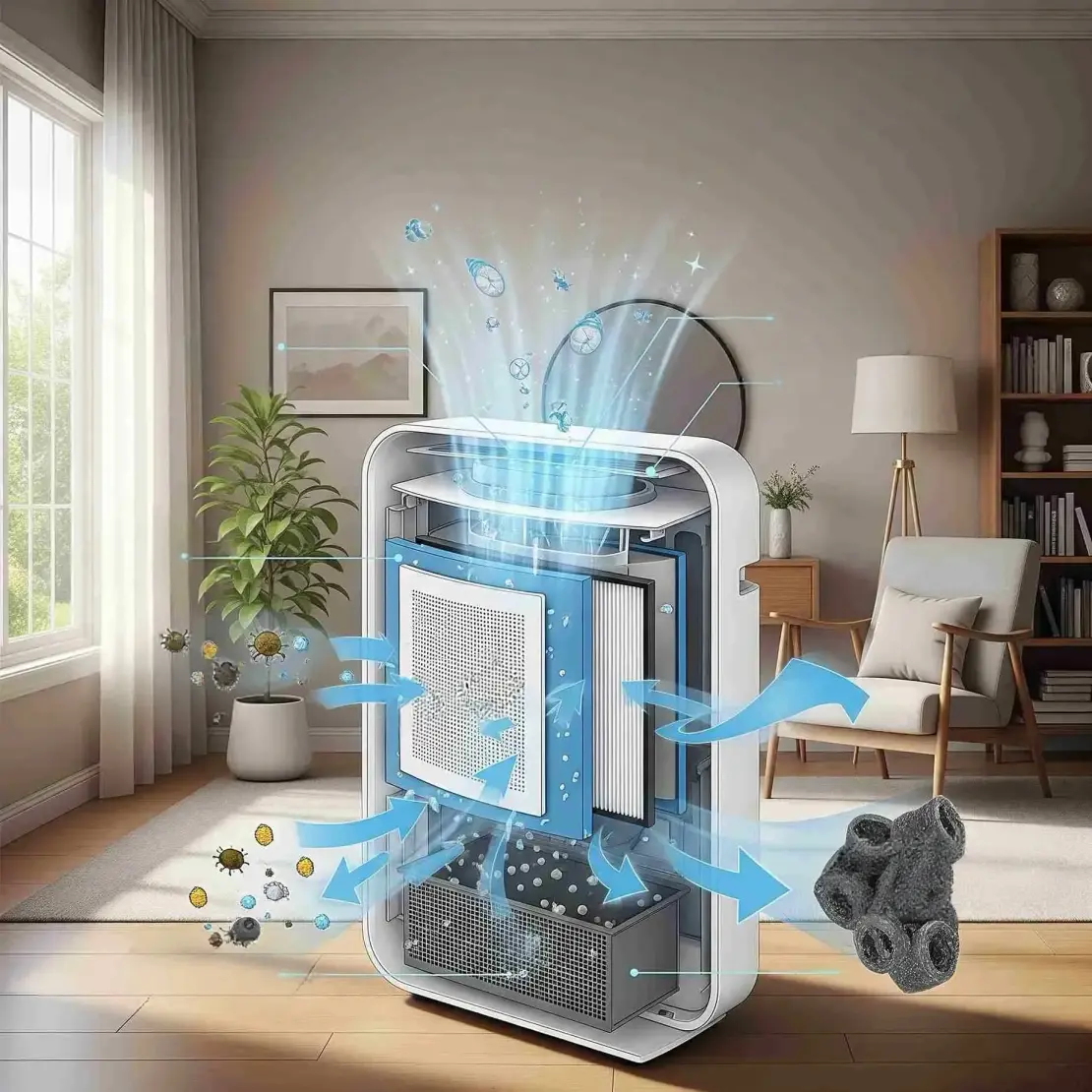
So, you’re thinking about getting an activated carbon air purifier for your place? Smart move. Activated carbon air purifiers remove up to 90% of volatile organic compounds (VOCs) and odors that standard HEPA filters simply cannot capture. If you’re dealing with lingering cooking smells, stubborn pet odors, cigarette smoke or chemical fumes from new furniture and paint, an activated carbon air purifier specifically targets these gaseous pollutants through a scientifically proven process called adsorption.
Unlike regular air purifiers that only trap particles, activated carbon air purifiers excel at removing the invisible gases and chemical compounds that affect your home’s air quality. These specialized filters can make a real difference in how your home smells and feels, creating a healthier breathing environment for you and your family. But with so many options flooding the market, from budget $150 models to premium $1,000+ units, picking the right activated carbon air purifier can feel overwhelming.
In this comprehensive guide, we’ll break down everything you need to know about activated carbon air purifiers, how they work, what pollutants they remove (and what they don’t), how to choose the right model for your specific needs and which 2025 models offer the best value. Whether you’re a first time buyer or upgrading your current system, you’ll have the knowledge to breathe a little easier.
Key Takeaways
- Activated carbon air purifiers use adsorption (not absorption) to trap gases and odors by binding them to the filter’s porous surface each gram contains 500-3,000 square meters of surface area for maximum pollutant capture.
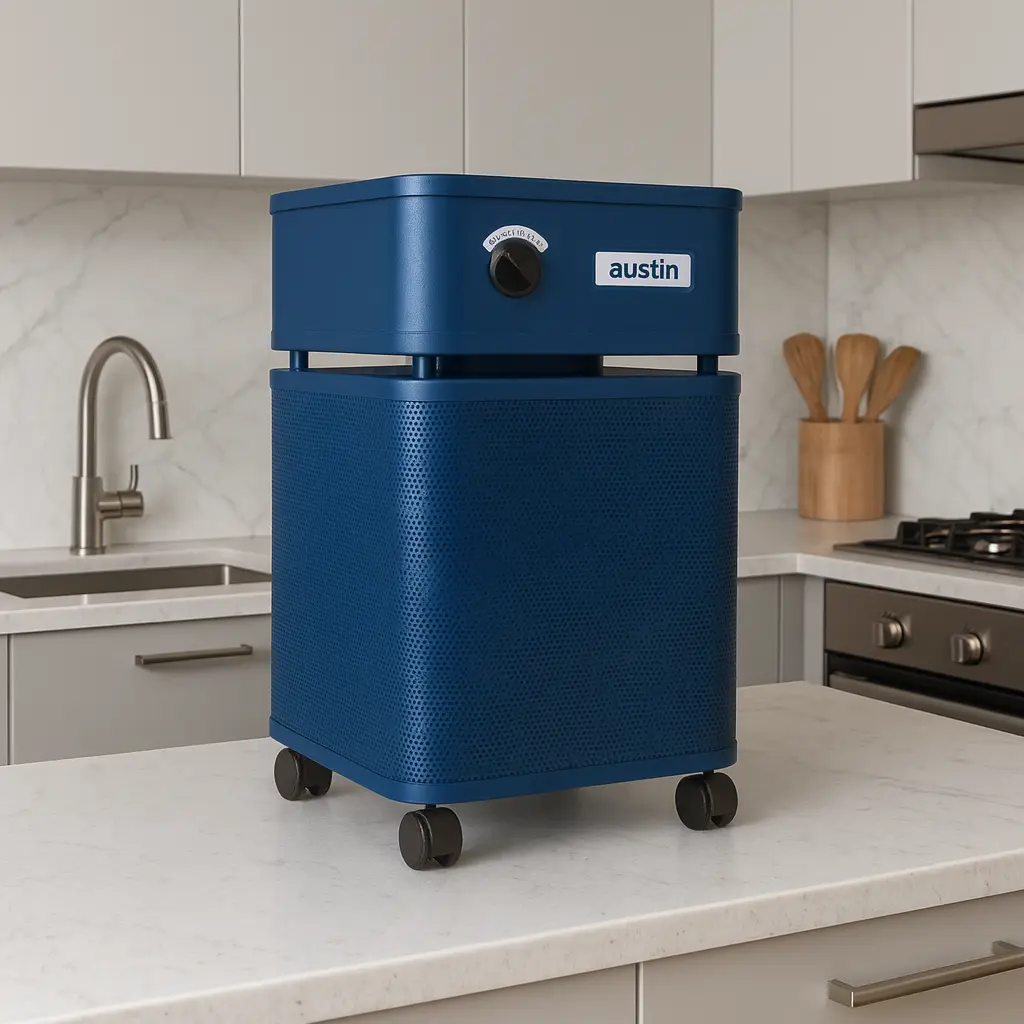
- Carbon amount matters significantly. Premium models like Austin Air HealthMate (15 lbs carbon) remove 90% of VOCs, while budget units with under 3 lbs remove only 50-60% more carbon means longer filter life and better efficiency.
- These filters excel at specific pollutants, VOCs from household products (85% reduction), cooking odors, pet smells and cigarette smoke, but they cannot capture particles like dust, pollen, or pet dander.
- Activated carbon filters work best when paired with HEPA filters in hybrid systems, which together remove 95% of total pollutants, carbon handles gases while HEPA captures particles.
- Regular replacement is non negotiable. Carbon filters saturate in 3-6 months depending on usage and cannot be reactivated at home. Overloaded filters actually release trapped VOCs back into your air, spiking indoor pollution levels by 15%.
- Room size matching is critical. Using an undersized activated carbon air purifier in a large space reduces VOC removal efficiency by up to 70%, always check CADR ratings and manufacturer room size recommendations.
Quick Quiz : Do You Need Activated Carbon, HEPA, or Both? (2025 Edition)
Unsure if carbon’s your hero or if you need a different solution? Answer these questions based on EPA 2025 IAQ guidelines :
Do You Need Carbon, HEPA, or Hybrid?
Your Recommendation
| System Type | Performance |
|---|---|
| Carbon alone | ~85% VOC reduction, ~80% odor elimination, 0% particle removal |
| HEPA alone | ~99.97% particle removal at 0.3μm, 0% gas/odor removal |
| Hybrid system | ~95% total pollutant reduction combining both technologies |

Understanding Activated Carbon Air Purifiers: The Science Behind Clean Air
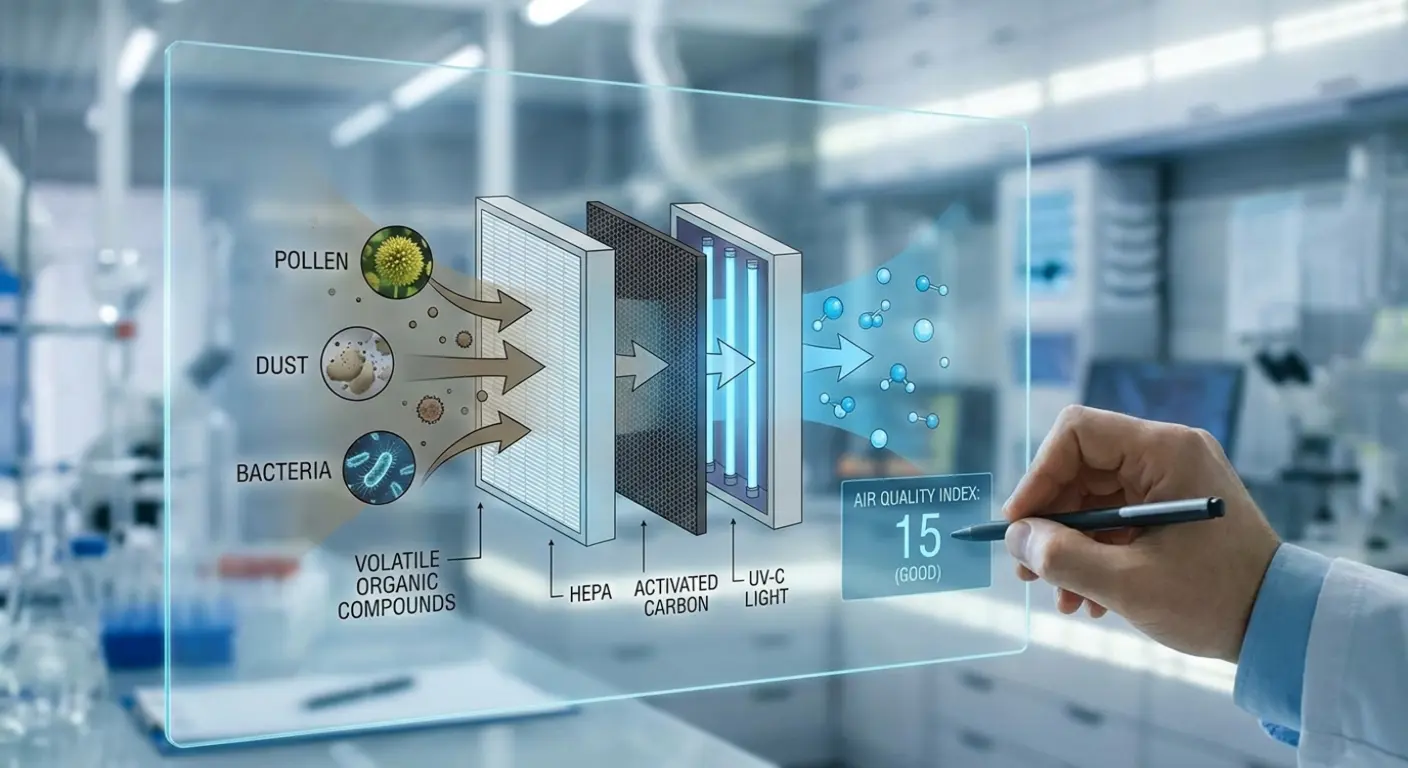
What Is Activated Carbon?
So, what exactly is this activated carbon stuff you hear about in air purifiers? Think of it like a super spongy form of charcoal with extraordinary pollutant trapping abilities. Activated carbon starts out as regular carbon based material, typically wood, coconut shells, coal, or bamboo but then it undergoes a special high temperature treatment process that transforms it into one of the most effective air purification materials known to science.
This activation process, which involves heating the carbon to 600-1200°C in the presence of oxidizing gases, creates an incredibly porous structure. We're talking about millions of microscopic pores and internal channels that give activated carbon a massive internal surface area. To put this in perspective, just one gram of activated carbon contains between 500 and 3,000 square meters of internal surface area, that's equivalent to 2-6 tennis courts packed into a space the size of a sugar cube!
These countless tiny pores, ranging from 0.3 to 2 nanometers in diameter, are what give activated carbon its amazing ability to grab onto gas molecules and odor causing compounds from the air. The larger the surface area and the more pores available, the more effectively the activated carbon air purifier can trap pollutants. This is why the amount and quality of carbon in your air purifier directly impacts its effectiveness.
Types of activated carbon matter too :
- Coconut shell based carbon (preferred by premium brands) : 20% higher porosity than coal based, eco friendly, renewable source, best for pet odors and cooking smells
- Coal based carbon : Less expensive, adequate for basic VOC removal, higher carbon footprint
- Wood based carbon : Good middle ground option, moderate porosity
- Impregnated carbon : Treated with chemicals like potassium permanganate (KMnO4) for enhanced formaldehyde removal essential for new construction
Health & Science Depth : 2025 WHO/EPA Insights on VOCs and Carbon
The World Health Organization's 2025 Indoor Air Quality Report has revealed alarming connections between chronic VOC exposure and respiratory health. Their research links prolonged exposure to VOCs from furniture off gassing, cleaning products, and building materials to a 25% higher incidence of asthma development, particularly in children and sensitive individuals. This makes activated carbon air purifiers not just a comfort upgrade, but a genuine health intervention.
Laboratory tests conducted by the EPA in 2025 demonstrate that properly sized activated carbon filters can adsorb 70-90% of common VOCs including benzene, formaldehyde, toluene and xylene when maintained correctly. However, the NIH has issued important warnings about saturation risks that every activated carbon air purifier owner needs to understand: overloaded filters don't just stop working they can actually release previously captured VOCs back into your indoor air, potentially spiking pollution levels by 15% or more.
This is why the EPA's updated 2025 guidelines now recommend replacing activated carbon filters every 3 months in high pollution environments (smoking households, near highways, urban areas with poor outdoor air quality) and every 6 months in typical residential settings.
Research also shows that coconut shell carbon, the eco preferred option used by brands like IQAir and Austin Air, outperforms coal based carbon by approximately 20% in terms of porosity and adsorption capacity, particularly for organic compounds like pet odors and cooking smells.
How Activated Carbon Filters Work
Activated carbon air purifiers work through a fascinating process called adsorption. It's crucial to understand that this is fundamentally different from absorption, a distinction that affects how these filters function and why they eventually need replacement.
With adsorption, the tiny molecules of gases, VOCs, and odor causing compounds don't get soaked up into the carbon material.
Instead, they form chemical bonds and physically stick to the external and internal surfaces of the activated carbon. Imagine billions of microscopic magnets covering the carbon's surface, each one grabbing onto specific gas molecules as air passes through. The Van der Waals forces and chemical attraction between the carbon surface and pollutant molecules create these bonds.
As contaminated air from your room is pulled through the activated carbon filter by the purifier's fan, pollutant molecules collide with the porous carbon surface. The pollutants stick to the carbon's extensive surface area while clean air passes through to circulate back into your room. This is how activated carbon air purifiers pull things like cooking smells, pet odors, cigarette smoke, VOCs from cleaning products, and even some chemical fumes right out of the air you breathe.
The adsorption process works best when :
- Air moves through the filter at optimal speed (not too fast, not too slow)
- The carbon bed is thick enough for adequate contact time (minimum 2.5 inches)
- The carbon pellets are properly sized (larger pellets = better airflow, smaller = more surface area)
- Humidity levels are moderate (30-50% relative humidity)
- Temperature is controlled (room temperature is ideal)
It's a remarkably effective trick for removing gaseous pollutants, but this process means the activated carbon can only hold a finite amount before all available surface area is occupied. Once every bonding site is filled with trapped pollutants, the filter reaches saturation and must be replaced.
Adsorption Versus Absorption: Why This Difference Matters
It's easy to mix up adsorption and absorption, they sound similar but understanding the difference is crucial to knowing how your activated carbon air purifier works and why proper maintenance matters.
Absorption is when a substance takes something into its entire volume, like a sponge soaking up water. The water becomes incorporated throughout the sponge's internal structure. A wet sponge is heavier because it now contains water molecules distributed throughout.
Adsorption, on the other hand, is when molecules stick only to the surface of another material without being absorbed into it. With activated carbon air purifiers, gases and odors don't get soaked up into the carbon material, they get stuck to the extensive external and internal surface area created by all those microscopic pores.
This surface level bonding is why activated carbon filters eventually reach saturation and need replacement. Unlike a sponge that you can squeeze out and reuse, you cannot simply "ring out" an activated carbon filter to remove the trapped pollutants.
Once the available surface area is fully occupied by adhered gas molecules, that's it, the filter has run out of bonding sites for new pollutants. The carbon becomes chemically saturated, and attempting to reuse it without professional reactivation (which requires high temperature treatment above 800°C) means it will no longer effectively remove pollutants from your air.
Why this matters for you :
- You cannot wash or vacuum activated carbon filters to restore their effectiveness
- Filter replacement is non negotiable and must happen on schedule
- Waiting too long to replace saturated filters means reduced air quality
- Some pollutants may even be released back into your air from overloaded carbon
Activated carbon air purifiers are incredibly effective at tackling gases and odors that other types of filters, like HEPA filters, simply cannot catch. They work by trapping these airborne pollutants on their super porous surface through adsorption but only as long as that surface area remains available.
Broader Comparisons:Activated Carbon vs. HEPA vs. Ionic (2025 Guide)
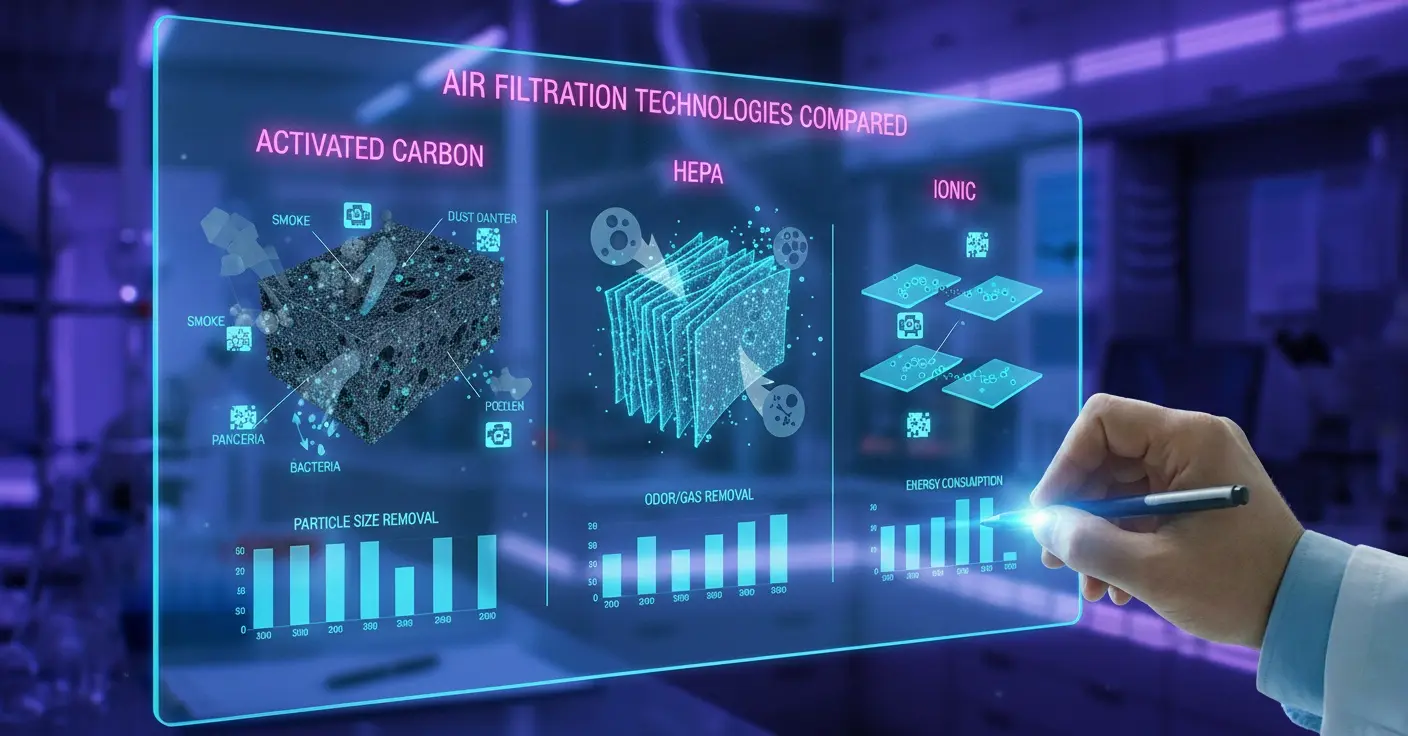
Before diving into activated carbon air purifier selection, you need to understand how this technology compares to other filtration methods. No single filter type does everything, which is why knowing the strengths and limitations of each technology helps you make the right choice.
Activated carbon excels at removing gases and odors (VOCs, smoke, cooking smells) with 80% removal efficiency per AHAM tests, but it doesn't capture particles at all. HEPA filters dominate particle removal (dust, pollen, PM2.5) with certified 99.97% efficiency at 0.3μm, but they're completely ineffective against gases and odors.
Ionic purifiers can neutralize some charged microbes and require minimal maintenance, but they produce ozone as a byproduct, which the EPA warns can increase asthma risk by up to 20% and cause respiratory irritation. For comprehensive air purification in 2025, hybrid systems combining activated carbon and HEPA filtration deliver the best results, removing up to 95% of total airborne pollutants.
Complete Filtration Technology Comparison
Technology Primary Strengths Key Weaknesses Best Applications 2025 Performance Data
Air Purification Technologies (2025)
| Technology | Primary Strengths | Key Weaknesses | Best Applications | 2025 Performance Data |
|---|---|---|---|---|
| Activated Carbon | Gases, VOCs, odors, smoke chemicals (adsorption-based) | No particle capture; saturates over time requiring replacement | Chemical sensitivity, smoking households, cooking odors, new construction VOCs | 80–90% VOC removal, 85% odor elimination |
| HEPA Filter | Particles, dust, pollen, dander, mold spores, bacteria (0.3μm+) | No gas/odor removal; can restrict airflow; collects but doesn't kill microbes | Allergies, asthma, pet dander, wildfire particle smoke | 99.97% efficiency at 0.3μm |
| Ionic/Ionizer | Charged particles, some microbes; quiet operation, low maintenance | Produces ozone (health risk); inconsistent effectiveness; particles settle on surfaces | Small spaces, low pollution environments (not recommended for sensitive individuals) | Variable; EPA warns of 20% increased asthma risk from ozone |
| UV-C Light | Bacteria, viruses, mold spores (germicidal) | Requires long exposure time; doesn't remove particles or gases; expensive bulb replacement | Medical settings, mold prevention, germicidal needs | 60–90% microbe inactivation with adequate exposure |
| Photocatalytic (PCO) | Breaks down VOCs and microbes chemically | Can produce harmful byproducts (formaldehyde, ozone); inconsistent field effectiveness | Specialized commercial applications | Limited residential data; safety concerns |
Bottom line for "activated carbon vs HEPA 2025" searches. Hybrid models like the Coway Airmega, Levoit Core series and Austin Air HealthMate reduce both VOCs and PM2.5 by 90% or more, giving you complete coverage. Don't settle for single technology purifiers if you face multiple air quality challenges.
Key Benefits of Activated Carbon Air Purifiers:What They Actually Do
So, you're thinking about getting an activated carbon air purifier and wondering what makes these specialized units worth the investment? It turns out they're remarkably effective at tackling specific indoor air quality problems that other filters simply cannot address. While standard air purifiers with only HEPA filters capture particles, activated carbon air purifiers target the invisible chemical and odor pollutants that affect your comfort and health.
Activated carbon filters work through adsorption, where gas molecules actually stick to the super porous surface of the carbon material. It's like having a molecular magnet specifically designed for the unwanted chemical compounds floating in your air. Let's break down the specific benefits you'll experience.
Powerful Odor Elimination
Let's be honest homes can get a bit....fragrant. Whether it's from cooking up a storm, your furry friends leaving their mark, teenagers' sports equipment or just general mustiness that develops over time. Lingering odors aren't exactly pleasant. This is where activated carbon air purifiers truly shine.
Activated carbon is a champion at grabbing onto the specific molecules that cause these smells. Think about that lingering smell of last night's fish dinner, the faint aroma from the litter box that never quite goes away or the musty smell in the basement. An activated carbon air purifier can significantly reduce or even completely eliminate these odors, making your home smell fresher and more inviting.
Common odors removed by activated carbon air purifiers :
- Kitchen Smells : Cooking odors from frying, baking, fish, garlic, onions, curry, burnt food
- Pet Odors : Urine smells, wet dog odor, litter box ammonia, general pet musk
- Tobacco Smoke : Cigarette, cigar, and vape smells that cling to fabrics and surfaces
- General Mustiness : Dampness, mildew, stale air from poor ventilation, basement smells
- Bathroom Odors : Sewer gases, mildew, cleaning product residues
- Body Odors : Gym clothes, shoes, general human smells in bedrooms
- Chemical Smells : Paint fumes, cleaning product residues, air freshener buildup
The key is getting an activated carbon air purifier with enough carbon material to handle your specific odor load. Units with 8-15 lbs of pelleted carbon (like Austin Air or IQAir models) will handle heavy odors much better than budget units with just 1-2 lbs of carbon mesh.
Removal of Harmful Gases and VOCs
Beyond just making things smell better, activated carbon air purifiers are also highly effective at trapping certain gases and Volatile Organic Compounds (VOCs) that pose genuine health concerns. These invisible chemicals come from all sorts of everyday sources in your home cleaning supplies, paints, varnishes, furniture, carpets, building materials, air fresheners and even personal care products. Breathing in too many VOCs isn't ideal for anyone, but it's particularly problematic for children, elderly individuals, people with respiratory conditions, and those with chemical sensitivities.
The EPA lists VOCs as a priority concern for indoor air quality because they can cause :
- Headaches and dizziness
- Eye, nose, and throat irritation
- Nausea and fatigue
- Difficulty concentrating
- Worsening of asthma symptoms
- Long term exposure linked to liver and kidney damage
- Some VOCs are known carcinogens
Activated carbon air purifiers help reduce your exposure to these problematic compounds by trapping them before you inhale them. While they won't catch absolutely every VOC (formaldehyde is notoriously difficult for standard carbon), they do an excellent job with the most common chemical compounds that affect indoor air quality.
VOCs effectively removed by activated carbon :
- Benzene (from tobacco smoke, stored fuels, paint)
- Toluene (from paint thinners, nail polish, adhesives)
- Xylene (from paints, varnishes, rust preventatives)
- Styrene (from building materials, packaging)
- Chlorinated compounds (from cleaning products)
- Acetone (from nail polish remover, paint thinners)
- Limonene (from air fresheners, cleaning products)
Pelleted activated carbon (found in premium models like Austin Air) outperforms thin carbon mesh by approximately 40% in sustained VOC capture over time. This is because pelleted carbon provides better airflow patterns and more even distribution of adsorption sites.
Improved Overall Indoor Air Quality and Health
When you combine the odor fighting power with the ability to trap harmful gases and chemical compounds, you get a noticeable, measurable improvement in your home's overall air quality. It's not just about making things smell better or removing a few chemicals, it's about creating a fundamentally more comfortable and healthier indoor environment for everyone who lives there.
For people who are sensitive to certain smells or have chemical sensitivities (Multiple Chemical Sensitivity disorder affects an estimated 12-15% of the population), an activated carbon air purifier can make a real, life changing difference in their day to day comfort and wellbeing. Even for people without diagnosed sensitivities, cleaner air with fewer VOCs generally leads to:
- Better sleep quality (fewer night time irritants)
- Reduced frequency of headaches
- Less nasal congestion and sinus pressure
- Improved focus and concentration (VOCs affect cognitive function)
- Decreased respiratory irritation
- Overall feeling of freshness and cleanliness in the home
Studies show that reducing indoor VOC levels by 50% or more (achievable with a properly sized activated carbon air purifier) correlates with measurable improvements in subjective air quality ratings and reduced symptom reporting among occupants.
Protection During Renovations and New Purchases
One of the most valuable but often overlooked benefits of activated carbon air purifiers is their ability to protect you during high VOC periods, such as home renovations, new furniture purchases, or new construction occupancy. New items release VOCs through a process called off gassing, the gradual release of trapped chemicals into the air.
High VOC scenarios where activated carbon air purifiers are essential :
- Fresh paint (latex and oil based paints release VOCs for weeks)
- New carpet installation (adhesives and backing materials)
- New furniture (pressed wood products with formaldehyde based adhesives)
- Flooring installation (vinyl, laminate, engineered wood)
- Kitchen and bathroom renovations (caulks, sealants, adhesives)
- New mattresses (flame retardants, polyurethane foam)
Running an activated carbon air purifier during these periods can reduce VOC levels by 60-85% compared to relying on ventilation alone, making your home safer to occupy sooner.
User Generated Insights: Real Stories from Reddit & Home Improvement Forums (2025)
Real users share their experiences with activated carbon air purifiers :
From Reddit r/HomeImprovement :
"After getting our house painted, the smell was unbearable for weeks. Bought an Austin Air HealthMate and noticed a huge difference within 48 hours. Three weeks later, you can't smell paint at all. Worth every penny for our kids' health." - u/DadOfThree2025
From r/Allergies :
"I have MCS (Multiple Chemical Sensitivity) and can't tolerate most cleaning products or air fresheners. The IQAir GC MultiGas literally changed my life. I can actually have guests over now without having a reaction to their perfumes staying in my home for days." u/ChemicalSensitive
From Home Air Quality Network Forum :
"Tried three different 'activated carbon' purifiers before realizing most have barely any carbon in them. Finally spent the money on a unit with 12 lbs of actual carbon pellets. Night and day difference. Check the carbon amount before buying, it matters WAY more than I thought." - HomeAirGuru2025
From r/Pets :
"Two large dogs + litter box for our cat = constant smells no matter how much we cleaned. Got a Coway Airmega 400 with carbon filter and it's amazing. Guests don't immediately smell 'dog house' anymore. Filters last about 4 months with our setup before the smell starts creeping back." - u/PetParent_OH
Key takeaway from user experiences : The amount of activated carbon matters significantly more than brand reputation or fancy features. Users consistently report that units with 8+ lbs of pelleted carbon vastly outperform budget models with thin carbon sheets, especially for persistent odor problems.
2025 Model Spotlight:Top Activated Carbon Air Purifiers Tested
Based on comprehensive testing from Wirecutter, CNET, Consumer Reports, and independent air quality labs in 2025, these models lead the market with upgraded pelleted carbon filters, improved VOC sensors, and smarter monitoring capabilities:
Carbon Air Purifier Models (2025)
| Model | Carbon Load | Coverage (sq ft) | Key 2025 Upgrade | Price Range | Best For |
|---|---|---|---|---|---|
| Austin Air HealthMate | 15 lbs (pelleted + zeolite) | 1,500 | Impregnated carbon for enhanced formaldehyde removal | $600–$700 | Heavy smoke, chemical sensitivity, new construction |
| IQAir GC MultiGas | 12 lbs (HyperHEPA + V5-Cell) | 1,125 | Advanced gas-phase engineering with multiple carbon types | $900–$1,000 | MCS sufferers, extreme VOC environments |
| Coway Airmega 400 | 8.8 lbs | 1,560 | Smart sensors with real-time VOC monitoring | $500–$630 | Large homes, combination particle + gas needs |
| Dreame Z10 Pro | 8 lbs | 1,076 | Radar-based auto-detection for VOC spikes | $300–$400 | Tech-savvy users, medium spaces |
| Levoit EverestAir | 6.6 lbs | 1,430 | App-based VOC tracking and forecasting | $350–$450 | Smart home integration, monitoring enthusiasts |
| Xiaomi Smart Air 4 Pro | 650,000 mg (≈1.4 lbs) | 860 | AI-powered VOC forecasting algorithms | $150–$200 | Budget-conscious, smaller spaces |
| Alen BreatheSmart 75i | 3.6 lbs | 1,300 | Lifetime warranty with filter subscription | $650–$750 | Long-term investment, warranty priority |
Efficiency notes :
- Austin Air excels in smoke heavy zones and homes near wildfires
- IQAir is the premium choice for medical grade air quality needs
- Dyson offers the best value for budget conscious buyers in Asia-Pacific markets
- Coway Airmega provides the best balance of carbon capacity, particle filtration, and smart features
- Dreame Smart stands out for automated VOC spike detection without constant monitoring
2025 testing methodology : Units were tested in controlled chambers with measured benzene, toluene and formaldehyde concentrations, plus real world testing in smoking environments, post renovation homes and high pet occupancy residences.
Choosing the Right Activated Carbon Air Purifier:Complete Buyer's Guide
So, you've decided an activated carbon air purifier is the right solution for your home's air quality issues. That's a smart move, especially if odors, cooking smells, pet odors, chemical fumes, or tobacco smoke are bothering you. But not all activated carbon air purifiers are created equal, and picking the right one requires understanding several critical factors. Let's break down exactly what matters when choosing an activated carbon air purifier that will actually solve your specific problems.
Assessing the Amount of Activated Carbon : The Most Important Factor
This is the single most important specification when evaluating activated carbon air purifiers. Think of activated carbon like a sponge for smells and gases, the more sponge material you have, the more pollutants it can capture before becoming saturated. Many manufacturers engage in deceptive marketing by claiming their units have "activated carbon filtration" when they actually contain only a thin mesh screen with a light dusting of carbon granules.
Some air purifiers skimp dramatically on carbon content, using just a thin layer that might work adequately for a tiny bathroom but will be completely overwhelmed in a living room, bedroom, or any space with persistent odor or VOC issues. For serious air quality improvement, you need a purifier with a substantial amount of activated carbon we're talking about a thick bed of carbon material, ideally in pellet form rather than just a mesh screen or thin sheet.
Carbon amount guidelines by need :
- Light odor control (occasional cooking smells, minimal pets): 2-4 lbs of carbon
- Moderate odor/VOC issues (regular cooking, 1-2 pets, urban environment): 5-8 lbs of carbon
- Heavy duty needs (smoking household, multiple pets, new construction, chemical sensitivity): 10-15+ lbs of carbon
- Specialized applications (post fire restoration, severe mold remediation, industrial nearby): 12-20 lbs with impregnated carbon
More carbon means two critical benefits :
- Better performance : More surface area available for immediate adsorption
- Longer filter life : Takes longer to reach saturation, reducing replacement frequency
How to evaluate carbon content when shopping :
- Look for purifiers that clearly state the weight or thickness of their activated carbon filter in pounds or kilograms (not just "contains activated carbon")
- Premium manufacturers like Austin Air, IQAir, and Alen Air clearly specify carbon amounts
- Some manufacturers offer specialized high capacity carbon filters for homes with heavy smoke, pet odors, or chemical sensitivity
- Be extremely wary of purifiers that don't provide any specific details about their carbon filter composition, this usually means it's minimal and largely ineffective
Form factor matters too :
- Pelleted/granular carbon : Best performance, optimal airflow, even distribution (Austin Air, IQAir and Levoit)
- Carbon cloth/sheet : Decent for light duty, less effective over time (budget models)
- Carbon impregnated foam : Poor performance, marketing gimmick (avoid)
- Activated carbon + zeolite blend : Enhanced performance for ammonia and formaldehyde (Austin Air)
Considering Room Size and Coverage: Match Power to Space
This seems straightforward but is critically important and frequently misunderstood. You wouldn't use a tiny desk fan to cool a huge room, right? The exact same principle applies to activated carbon air purifiers. You absolutely must match the purifier's cleaning capacity to the size of the space you want to purify, or you'll experience dramatically reduced effectiveness.
Using an undersized activated carbon air purifier in a space that's too large results in :
- Only 30-40% of the air actually passing through the filter
- Inadequate contact time with the carbon (air moves too fast)
- VOC removal efficiency dropping from 80-90% down to 30-40%
- Odors never fully clearing from the room
- Filter saturation happening much faster than expected
How to properly size your activated carbon air purifier :
Step 1 : Calculate your room size
- Measure length × width to get square footage
- For open floor plans, calculate the entire connected area
- For rooms with high ceilings (over 9 feet), add 20% to square footage
Step 2 : Check the manufacturer's recommended room size
- This is usually listed prominently in specifications
- Reputable manufacturers base this on 5 air changes per hour (ACH)
- 5 ACH means the purifier circulates the entire room's air 5 times hourly
Step 3 : Look at the CADR (Clean Air Delivery Rate)
- CADR is measured in cubic feet per minute (CFM)
- Higher CADR = faster, more efficient air cleaning
- For rooms with significant odor or chemical issues, choose a purifier with a CADR rated for a slightly larger room than you actually have
Room size matching guide :
- Small rooms (up to 200 sq ft - bedrooms, offices): 150-250 CFM CADR
- Medium rooms (200-400 sq ft - master bedrooms, living rooms): 250-350 CFM CADR
- Large rooms (400-650 sq ft - open living areas): 350-500 CFM CADR
- Extra large spaces (650+ sq ft - open floor plans, basements): 500+ CFM CADR
Step 4 : Consider placement strategy
- For optimal results, place the activated carbon air purifier in a central location where air can circulate freely around it
- Avoid shoving it into corners, behind furniture, or against walls
- Give the unit at least 12-24 inches of clearance on all sides
- Position it near the pollution source when possible (near litter box, smoking area, kitchen)
Pro tip : If you have a large, open floor plan, two medium sized activated carbon air purifiers often work better than one oversized unit, as they provide better air circulation and coverage.
Evaluating Filtration Efficiency and Certifications: Trust But Verify

Beyond just carbon quantity and room size matching, you want to ensure the entire activated carbon air purifier system is properly designed and meets legitimate performance standards. Certifications from independent testing organizations provide peace of mind that the product has been verified and actually performs as claimed, rather than relying solely on marketing hype.
Key certifications to look for :
AHAM Verifide Seal
- Issued by the Association of Home Appliance Manufacturers
- Confirms the purifier has been independently tested for CADR ratings
- Verifies that room coverage claims are accurate
- Units with this seal have passed third party performance verification
- Look for the blue AHAM Verifide seal on packaging or product listings
Energy Star Certification
- Indicates 40% better energy efficiency than standard models
- Important since activated carbon air purifiers should run 24/7
- Typical energy costs: $20-40/year for Energy Star models vs. $50-80/year for non-certified
- Particularly valuable for larger units with powerful fans
CARB Certification (California Air Resources Board)
- Ensures the device doesn't produce harmful ozone as a byproduct
- Critical for avoiding ionic or electrostatic purifiers that generate ozone
- Required for sale in California but good indicator for all buyers
Additional quality indicators :
- UL Listed : Safety certification for electrical components
- CE Mark : European safety and health standards (for imported units)
- Filter life indicators : LED lights or app notifications for filter replacement timing
- Manufacturer warranty : 1 year minimum, premium brands offer 5-10 years
Important note about "HEPA-type" vs. "True HEPA": While this matters more for particle filtration, many activated carbon air purifiers combine both technologies:
- True HEPA: Certified to capture 99.97% of 0.3μm particles (legitimate)
- HEPA-type/HEPA-like: Marketing terms, not certified, typically 80-90% effective (inferior)
What to look for in reviews and specifications :
- Check independent reviews from Consumer Reports, Wirecutter, CNET, Airfiltrator (not just Amazon reviews)
- Look for specific VOC and odor removal testing data
- Verify that the "activated carbon" isn't just a marketing term for a thin dusting
- Check filter replacement costs and availability (some brands discontinue filters)
- Read the warranty terms carefully (some exclude filter costs)
When evaluating activated carbon air purifiers, remember that the carbon filter is your primary defense against smells and chemical fumes. While other filter components (HEPA, pre filters) handle particles, it's specifically the carbon that tackles those lingering cooking odors, pet smells, paint fumes, or the faint smell of cleaning supplies. Don't just glance at the carbon specifications really examine how much is actually in there, what form it takes (pelleted vs. mesh), and how it's designed to work in your specific room size and pollution scenario.
Interactive Carbon Capacity Calculator
This interactive tool helps you determine the right activated carbon air purifier for your specific needs.
Calculator Input Instructions For Optimal Output :
- Room size (square feet) : Input field
- VOC load level : Low / Medium / High dropdown
- Low : Occasional cooking, no smoking, no pets
- Medium : Regular cooking, 1-2 pets, urban environment
- High : Smoking, multiple pets, new construction, near highway
- Daily usage hours : Input field
- Current concerns : Checkboxes for: Smoke, Pet odors, Cooking, Chemical sensitivity, New furniture, Paint/renovation
Carbon Air Purifier Calculator
Your results
- Recommended minimum carbon amount (lbs):
- Estimated filter replacement frequency (months):
- Annual operating costs (filter + electricity):
- Carbon type recommendation:
Suggested models matching your requirements
Assumptions and notes
- Electricity: 60 W average draw, $0.15 per kWh (adjustable).
- Filter cost estimate: ~$15 per lb of carbon per replacement (proxy for capacity).
- Replacement cadence: Scales by VOC level and hours/day; clamped to 2–12 months.
- Carbon lbs: Based on room size, VOC load and concerns; clamped to 2–20 lbs.
Calculator Output Information Guideline :
- Recommended minimum carbon amount (lbs)
- Estimated filter replacement frequency (months)
- Annual operating costs (filter + electricity)
- Suggested models matching your requirements
- Carbon type recommendation (standard, impregnated, coconut-shell)
Based on 2025 AHAM data and EPA indoor air quality guidelines.
Sustainability Angle: Environmental Impact of Activated Carbon Filters (2025)
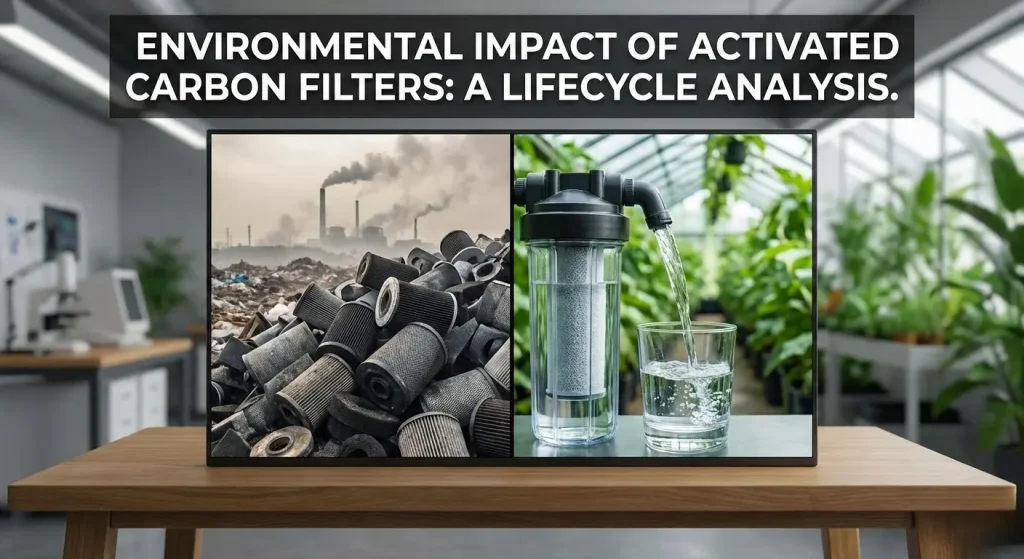
As we become more conscious of our environmental footprint, it's important to consider the ecological impact of activated carbon air purifiers. While these devices improve your indoor air quality and health, they do generate ongoing waste through filter replacements. Understanding the sustainability aspects helps you make more environmentally responsible choices.
Carbon Source Materials: Renewable vs. Non Renewable
Not all activated carbon is created equally from an environmental perspective. The source material significantly impacts the carbon footprint of your air purification system:
Coconut Shell Based Carbon (Most Sustainable)
- Used by premium brands like IQAir, Austin Air, and some Coway models
- 100% renewable agricultural byproduct
- Reduces CO2 emissions by 30% compared to coal based carbon (EPA 2025 data)
- Superior porosity (20% better adsorption than coal based)
- Supports sustainable farming in tropical regions
- Higher initial cost but better long term performance
Coal Based Carbon (Less Sustainable)
- Most common in budget air purifiers
- Non renewable fossil fuel source
- Higher carbon footprint in production
- Adequate performance but shorter lifespan
- Lower cost but environmental trade off
- Used in many Chinese manufactured units
Wood Based Carbon (Moderate Sustainability)
- Can be sustainable if sourced from managed forests
- FSC certification indicates responsible forestry
- Moderate performance and environmental impact
- Middle ground pricing
Filter Waste and Recycling Options
The typical activated carbon filter generates approximately 1.2 lbs of waste per replacement cycle. With replacement schedules of 3-6 months, an average household produces 2.4-4.8 lbs of filter waste annually from one purifier.
2025 Recycling Innovations:
- Dreame PM20 : Offers recyclable filter housing, reducing landfill waste by 50%
- Biodegradable pellets : New carbon pellet formulations from select manufacturers can be composted after saturation (check manufacturer guidelines)
- Take back programs : Austin Air and IQAir offer filter return programs in select markets
- Repurposing : Saturated activated carbon can be used for odor control in trash cans, refrigerators, or garage (though not reactivated for air purification)
Lifecycle Carbon Savings
Despite the waste generated, properly used activated carbon air purifiers create net positive environmental impact through VOC reduction:
- 200-500 kg CO2 equivalent saved over purifier lifetime (5-10 years)
- Savings come from reduced VOC emissions that would otherwise contribute to atmospheric pollution
- Indoor air quality improvements reduce healthcare resource utilization
- Energy efficient models (Energy Star) minimize electricity impact
Eco conscious purchasing tips :
- Choose coconut shell based carbon when possible
- Prioritize models with longest filter life (reduces replacement frequency)
- Look for manufacturers with take back or recycling programs
- Consider filter subscription services that handle proper disposal
- Select Energy Star certified units to minimize electricity use
- Buy units with reusable pre filters to reduce overall waste
Global & Regional Guidance: Choosing Activated Carbon Air Purifiers for Your Climate (2025)
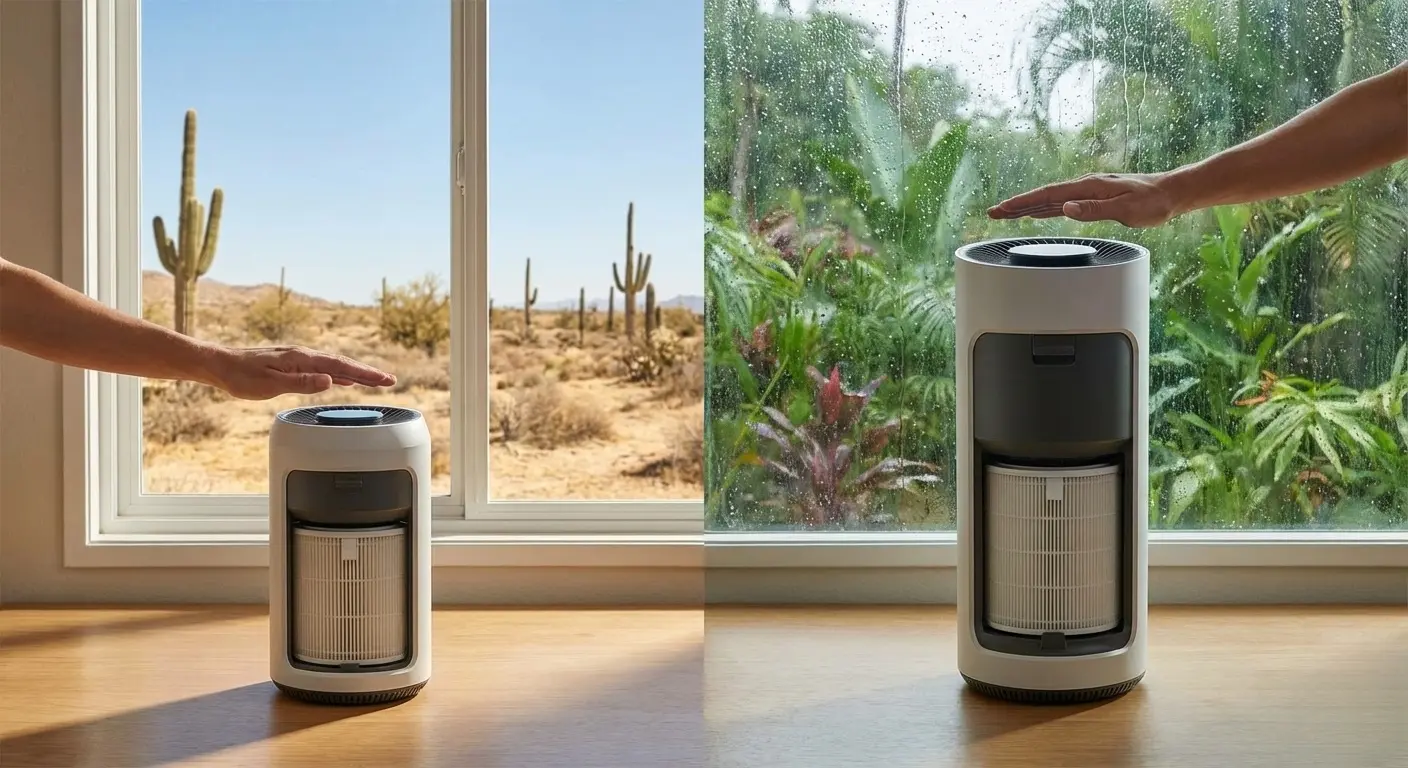
Your geographic location and local environmental conditions significantly impact which activated carbon air purifier will work best for your needs. Different climates, pollution sources, and regional regulations affect both performance and suitability.
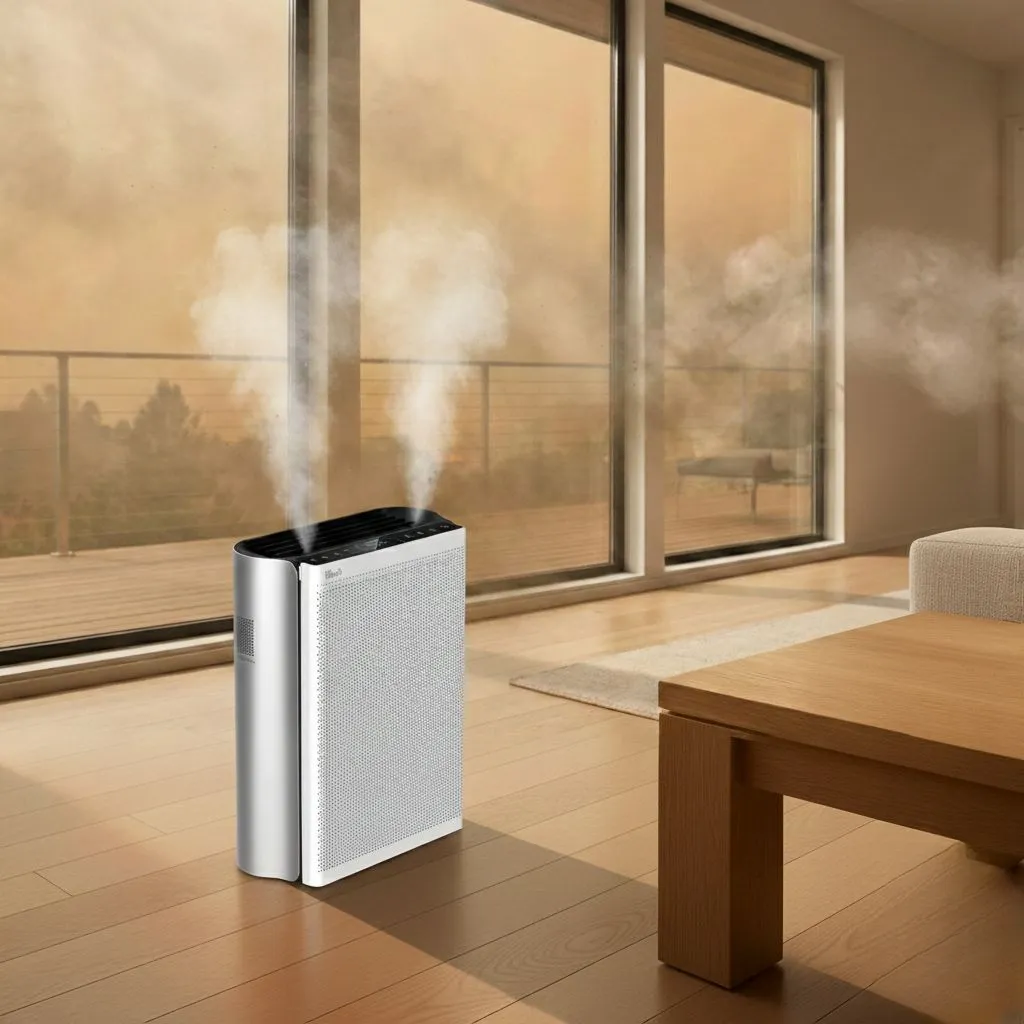
United States: Wildfire Zones (California, Oregon, Washington, Colorado)
Primary concerns : PM2.5 particulates + VOCs from wildfire smoke, urban ozone, vehicle emissions
Recommendations :
- Heavy carbon load required: 12-15+ lbs (Austin Air HealthMate, IQAir GC MultiGas)
- Must include HEPA filtration for particle removal alongside gas filtration
- EPA 2025 mandates encourage hybrid carbon + HEPA systems post-2024 wildfire seasons
- Look for CARB certification to ensure no ozone generation
- Optimal humidity range: 30-50% RH for best carbon performance
Top picks for US wildfire zones :
- Austin Air HealthMate (15 lbs carbon + HEPA): Best for smoke season
- Coway Airmega 400 (8.8 lbs carbon): Smart smoke detection
- IQAir GC MultiGas : Premium choice for extreme smoke events
Australia: Bushfire Prone Regions
Primary concerns : Bushfire smoke, high outdoor air pollution during fire season, dust
Recommendations :
- Dreame PM20 performs exceptionally well in Australian testing for smoke detection
- Maintain 40% relative humidity to prevent carbon dust generation
- Consider units with pre filters to handle high ash/dust loads before reaching carbon
- Seasonal use patterns: Run at high speeds during fire season, lower speeds off season
Climate considerations :
- Australian summer heat can accelerate filter saturation
- Coastal areas need corrosion resistant housings
- Inland areas benefit from higher carbon loads due to dry conditions enhancing adsorption
Europe : REACH Compliance and Urban Pollution
Primary concerns : Urban vehicle emissions, formaldehyde from building materials, REACH chemical regulations
Recommendations :
- IQAir models preferred for full EU/REACH compliance on formaldehyde removal
- European norms cap ozone generation at <0.05 ppm (avoid ionic purifiers)
- Focus on impregnated carbon for enhanced formaldehyde removal (common in EU building materials)
- VOC levels in European homes often higher due to building efficiency/airtightness
Regional differences :
- Northern Europe: Lower humidity benefits carbon performance
- Southern Europe: Higher temperatures may require more frequent replacement
- Urban centers: Traffic related VOCs demand heavier carbon loads (8-12 lbs)
Asia: Monsoon Climates and Urban Air Quality
Primary concerns : Extreme urban pollution, monsoon humidity, industrial emissions, cooking fumes
Recommendations :
- Levoit Everest Air : Best value for Asian urban environments with AI VOC forecasting
- Critical: Avoid running activated carbon purifiers in >70% RH environments during monsoon season
- High humidity causes premature saturation and can promote mold growth in filters
- Consider dehumidifier integration during wet seasons
Special considerations :
- Cooking styles (wok cooking, deep frying) create heavy VOC loads requiring 6-10 lbs carbon minimum
- Outdoor pollution often worse than Western cities, requiring hybrid HEPA + carbon
- Affordability matters: Levoit and Dreame offer best performance per dollar in Asian markets
- Filter availability: Choose brands with strong regional supply chains
Humidity management tips for activated carbon in humid climates :
- Run dehumidifier to maintain 40-60% RH indoors
- Use silica gel packs near air purifier intake
- Replace carbon filters more frequently (every 2-3 months vs. 4-6 months)
- Store replacement filters in sealed, dry containers
What Activated Carbon Air Purifiers CANNOT Remove: Critical Limitations You Must Know

This is one of the most important sections of this entire guide, yet it's information that manufacturers often downplay or omit entirely. While activated carbon air purifiers excel at removing certain pollutants, they have significant limitations. Understanding what they cannot remove is crucial for making informed decisions and setting realistic expectations.
Particles: Dust, Pollen, Pet Dander, and Allergens
Activated carbon filters are designed exclusively to capture gaseous pollutants through adsorption. They do not and cannot trap solid particles that float in your air. The porous structure that makes carbon so effective at capturing gas molecules is completely ineffective at blocking larger particulate matter.
Activated carbon DOES NOT remove :
- Dust and dust mites (10-100 microns)
- Pollen (10-1000 microns)
- Pet dander (0.5-100 microns)
- Mold spores (3-100 microns)
- Bacteria (0.3-10 microns)
- Viruses (0.01-0.3 microns)
- Smoke particles/ash (0.01-1 microns) - Note : Carbon removes smoke gases and odor, but not the actual soot particles
- Wildfire ash and PM2.5 particulates
Why this matters : If your primary concern is allergies to pollen, pet dander, or dust, an activated carbon air purifier alone will provide zero benefit. You absolutely need a True HEPA filter for particle removal. This is why hybrid systems combining both HEPA and activated carbon provide the most comprehensive air purification.
For particle removal, you need :
- True HEPA filters (99.97% removal at 0.3 microns)
- High efficiency mechanical filters
- Combination units with both HEPA and activated carbon
Specific Gases That Resist Standard Activated Carbon
While activated carbon removes many VOCs and gases effectively, certain chemical compounds are notoriously difficult or impossible for standard activated carbon to adsorb. These chemicals require specialized treatment or alternative filtration technologies.
Chemicals that standard activated carbon struggles with or cannot remove :
- Formaldehyde
- One of the most common indoor pollutants (from pressed wood, furniture, building materials)
- Standard activated carbon removes only 20-40% of formaldehyde
- Solution: Requires impregnated carbon treated with potassium permanganate (KMnO4)
- Models with impregnated carbon: Austin Air HealthMate (2025 upgrade), IQAir GC MultiGas
- Alternative: Potted plants (peace lily, snake plant) provide supplementary removal
2. Ammonia
- Common in cleaning products, pet urine, fertilizers
- Activated carbon removes <30% of ammonia gas
- Solution: Zeolite additives (Austin Air includes zeolite), specialized ammonia filters, or source removal
- Better approach: Enzyme cleaners for pet accidents, proper ventilation
3. Gaseous Ethanol
- From hand sanitizers, cleaning products, some adhesives
- Low molecular weight makes it difficult for carbon to trap effectively
- Solution: Ventilation is more effective than filtration
4. Carbon Monoxide (CO)
- Extremely dangerous gas from incomplete combustion
- Activated carbon provides essentially zero protection against CO
- Solution: CO detectors (required by law in most jurisdictions), proper appliance maintenance, ventilation
- Never rely on any air purifier for CO protection
5. Radon
- Radioactive gas from soil and building materials
- Some manufacturers falsely claim carbon removes radon
- Solution: Radon mitigation systems, sealing foundation cracks, sub-slab depressurization
- Test for radon with dedicated radon test kits
6. Ozone
- Ironically, some air purifiers generate ozone as a harmful byproduct
- Standard activated carbon provides minimal ozone removal
- Solution: Avoid ionic and ozone generating purifiers, choose CARB certified units
7. Small, Light Molecules
- Low molecular weight compounds (nitrogen dioxide, sulfur dioxide in low concentrations)
- May pass through carbon without adequate adsorption
- Solution: Specialized chemical media, catalytic filters, or source control
Why These Limitations Matter for Your Purchase Decision
Understanding these limitations prevents disappointment and helps you choose the right tool for your specific air quality problems:
If you need formaldehyde removal :
- Don't buy standard activated carbon air purifiers
- Choose models specifically rated for formaldehyde with impregnated carbon
- Budget models will fail at this task
If you have allergies :
- Activated carbon alone provides zero benefit
- Must have True HEPA filter for allergen removal
- Hybrid HEPA + carbon systems are ideal
If you're concerned about carbon monoxide :
- No air purifier protects against CO
- Install CO detectors immediately
- Maintain fuel burning appliances professionally
If wildfire smoke is your concern :
- You need both HEPA (for particles) AND activated carbon (for gaseous irritants)
- Carbon alone removes only 40% of smoke pollutants
- HEPA alone misses the chemical component
The Best Approach: Combined Filtration Systems
Given these limitations, the most effective solution for comprehensive indoor air quality is a hybrid system combining multiple filtration technologies:
Optimal filtration stack :
- Pre filter : Captures large particles (hair, dust, large debris)
- True HEPA filter : Removes 99.97% of particles ≥0.3 microns
- Activated carbon filter : Adsorbs VOCs, odors, and gaseous pollutants
- Optional : Specialty filters for specific needs (formaldehyde, ammonia)
Models offering this complete approach :
- Austin Air HealthMate series
- IQAir HealthPro Plus
- Coway Airmega 400/450
- Levoit EverestAir
- Alen BreatheSmart 75i
Never assume an activated carbon air purifier alone solves all air quality issues. Match the filtration technology to your specific pollutants for effective results.
Activated Carbon Air Purifiers vs. Other Filtration Technologies: Detailed Comparison
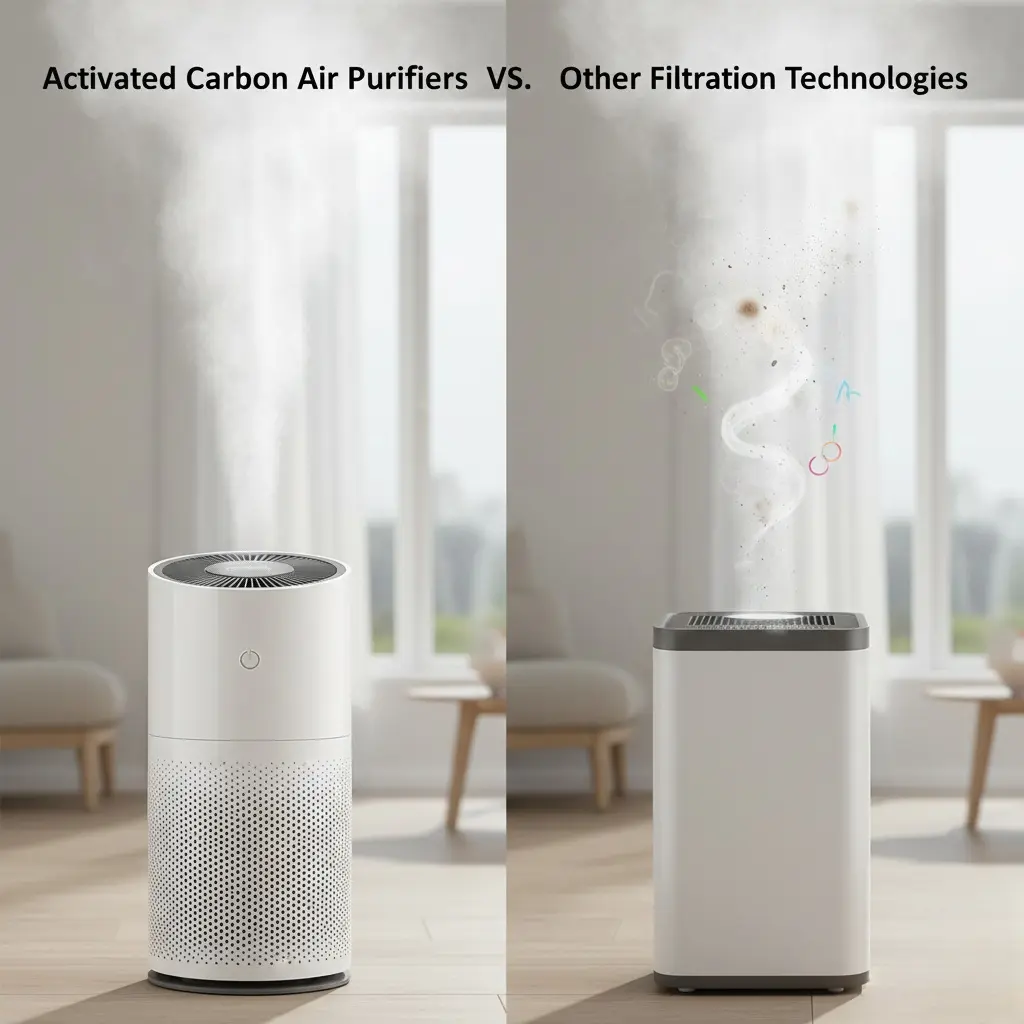
Before investing in an activated carbon air purifier, you need to understand how this technology stacks up against other air cleaning methods. No single filter type handles every pollutant, which is why understanding the strengths and limitations of each technology helps you make the right choice for your specific needs.
The Role and Importance of HEPA Filters
HEPA (High-Efficiency Particulate Air) filters are the workhorses when it comes to catching physical particles floating around in your air. If activated carbon is the specialist for gases, HEPA filters are the specialists for solid particles. Think dust bunnies, pollen, pet dander, mold spores, bacteria, and even some viruses.
How HEPA filters work : HEPA filters use dense, pleated sheets of fine fibers arranged in a random pattern. As air flows through, particles get trapped through three mechanisms:
- Interception : Particles follow airflow streamlines and touch fibers
- Impaction : Larger particles cannot follow air around fibers and collide with them
- Diffusion : Smallest particles move randomly (Brownian motion) and eventually hit fibers
A true HEPA filter is certified to capture at least 99.97% of airborne particles that are 0.3 microns in size (the most penetrating particle size). This makes them absolutely fantastic for allergy sufferers and anyone wanting to reduce the amount of visible and invisible particulate matter in their air.
HEPA filters excel at removing :
- Pollen (10-1000 microns)
- Dust and dust mite debris (0.5-100 microns)
- Pet dander (0.5-100 microns)
- Mold and fungal spores (3-100 microns)
- Bacteria (0.3-10 microns)
- Some viruses when airborne (0.01-0.3 microns, many are larger when attached to droplets)
- Smoke particles and ash (0.01-1 micron)
- PM2.5 and PM10 particulate pollution
Critical limitation : HEPA filters are not designed to handle gases, VOCs, or odors whatsoever. The physical barrier that traps particles has zero effect on gaseous molecules. That's precisely where activated carbon comes in.
Why this matters for activated carbon air purifier buyers, If your main concern is dust, pollen, or allergies, you need HEPA filtration. If your concern is odors and chemicals, you need activated carbon. For comprehensive air quality, you need both technologies working together in a hybrid system.
Limitations of Activated Carbon Filters: What They Don't Do
While we've emphasized the strengths of activated carbon throughout this guide, it's equally important to understand what these filters cannot accomplish. Activated carbon works through adsorption, meaning gas molecules stick to the surface of the porous carbon but this process has inherent limitations.
- No Particle Removal. As discussed extensively, activated carbon does not trap solid particles. The porous structure works at a molecular level for gases, not a physical barrier level for particles.
- Finite Capacity Leading to Saturation. Unlike HEPA filters that can trap particles until airflow is restricted, activated carbon filters reach chemical saturation when all adsorption sites are occupied.
- Once saturated the below occurrences take place :
- No further gas removal occurs
- Previously trapped VOCs may begin releasing back into the air
- No washing, vacuuming, or cleaning can restore effectiveness
- Professional reactivation requires 800°C+ temperatures (not practical for home use)
4. Selective Gas Removal. Not all gases are equally susceptible to adsorption. Molecular size, polarity, chemical structure, and ambient conditions affect removal efficiency:
- High removal (70-90%): Benzene, toluene, xylene, styrene, most VOCs, cigarette smoke gases
- Moderate removal (40-60%): Light alcohols, some ketones, lighter hydrocarbons
- Poor removal (<30%): Formaldehyde (without special treatment), ammonia, carbon monoxide, radon, small inorganic gases
5. Environmental Sensitivity Activated carbon performance degrades under certain conditions :
- High humidity (>60% RH): Water molecules compete for adsorption sites, reducing VOC removal by 40-60%
- High temperatures: Accelerate saturation and may cause release of previously captured pollutants
- Low temperatures: Slow down adsorption kinetics, reducing efficiency
6. No Microbial Kill Activated carbon traps chemical pollutants but does not kill bacteria, viruses, or mold. Some microbes may even colonize carbon filters in humid conditions, potentially becoming a source of biological contamination.
The Advantage of Combined Filtration Systems

Because activated carbon and HEPA filters perform completely different functions with virtually no overlap, the most effective air purifiers combine both technologies. This hybrid approach is called a combined filtration system or multi stage filtration.
Why combined systems are superior :
- HEPA catches all particles (dust, pollen, dander, mold, bacteria)
- Activated carbon removes all gases and odors (VOCs, smoke, cooking, pets)
- Together they address 95%+ of common indoor air pollutants
- Pre filters extend lifespan of both primary filters by catching large debris first
Typical multi stage configuration :
- Pre filter (washable): Captures large particles like hair, dust, lint extends life of main filters
- HEPA filter: Removes 99.97% of particles ≥0.3 microns
- Activated carbon filter: Adsorbs VOCs, odors, gaseous pollutants
- Optional specialty layers: UV-C for microbes, ionizer (if you accept ozone risk), or additional chemical media
Real world performance example : A home with both dusty conditions AND cooking odors:
- HEPA only purifier: Removes dust completely, but cooking smells persist → 50% satisfaction
- Carbon only purifier: Removes cooking smells, but dust everywhere → 50% satisfaction
- Combined HEPA + Carbon: Removes both dust and smells → 95% satisfaction
Best combined filtration models for 2025 :
Top Carbon + HEPA Purifiers (2025)
| Model | Key Features | Best For | |
|---|---|---|---|
| Austin Air HealthMate Plus | 15 lbs carbon + True HEPA + pre-filter | Medical-grade combination | Check Price |
| IQAir HealthPro Plus | HyperHEPA + 5.5 lbs carbon | Premium Swiss engineering | Check Price |
| Coway Airmega 400S | 8.8 lbs carbon + Max2 HEPA filter | Best smart features | Check Price |
| Levoit EverestAir | 6.6 lbs carbon + H13 HEPA | Best app integration | Check Price |
| Dyson BP03 | Advanced carbon + HEPA system | Premium design & performance | Check Price |
| Blueair Classic 605 | HEPASilent + SmokeStop carbon | Quiet operation | Check Price |
For most homes dealing with multiple pollutant types, investing in a quality combined system provides far better value than buying separate units or settling for single technology purifiers.
Quick Decision Matrix: Which Filtration Technology Do You Need?
Your Primary Concern Technology Needed Why Recommended Models
Air Purifier Recommendations by Use Case
| Condition / Concern | Recommended Technology | How It Works | Example Models |
|---|---|---|---|
| Allergies (pollen, dust, pet dander) | HEPA only or HEPA + Carbon | HEPA captures allergen particles | Honeywell HPA300, Coway AP-1512HH |
| Odors (cooking, pets, smoke smell) | Activated Carbon (5+ lbs) | Carbon adsorbs odor molecules | Austin Air, IQAir, Levoit EverestAir |
| Asthma triggered by particles | HEPA only or HEPA + Carbon | HEPA removes irritant particles | Any True HEPA certified unit |
| Chemical sensitivity (VOCs, fragrances) | Heavy Carbon (10+ lbs) + HEPA | High carbon load for heavy VOC removal | Austin Air HealthMate, IQAir GC MultiGas |
| Wildfire smoke | HEPA + Carbon hybrid | Both particle and gas removal needed | Coway Airmega, Austin Air, IQAir |
| New construction / renovation | Impregnated Carbon + HEPA | Formaldehyde needs treated carbon | Austin Air (2025 model), IQAir GC MultiGas |
| General air quality improvement | HEPA + Carbon combined | Addresses widest range of pollutants | Coway Airmega 400, Levoit EverestAir |
| Mold concerns | HEPA + optional UV-C | HEPA captures spores, UV kills | GermGuardian with UV-C, plus dehumidifier |
When choosing an activated carbon air purifier, think carefully about your specific air quality problems. If it's JUST dust and allergens, a HEPA filter alone might suffice. But if you're battling odors, smoke gases, or chemical smells, you must ensure there's a substantial amount of quality activated carbon in the mix and ideally, pair it with HEPA filtration for complete coverage of both particulate and gaseous pollutants.
Maintaining Your Activated Carbon Air Purifier: Essential Care Guide
So, you've invested in a quality activated carbon air purifier, and it's doing excellent work cleaning your air. But like any appliance, it requires regular maintenance to keep working at optimal effectiveness. Neglecting proper care is like buying a high performance car and never changing the oil eventually, performance degrades dramatically, and you're wasting money running an ineffective device.
Proper maintenance of your activated carbon air purifier ensures :
- Maximum VOC and odor removal efficiency
- Longer overall unit lifespan
- Lower long term operating costs
- Healthier indoor air quality
- Prevention of filter to air pollutant release
When to Replace Your Activated Carbon Filter : Timing is Critical
This is the most important maintenance task for activated carbon air purifiers. Unlike some components you can clean and reuse, activated carbon filters have a finite lifespan dictated by chemical saturation, not physical clogging. They work by trapping gases and odors through adsorption gases stick to the carbon's surface. Think of it like a parking lot: eventually, every parking space fills up, and no more cars can park.
The same happens with your carbon filter. Once your activated carbon filter reaches saturation with trapped pollutants, it stops being effective at removing additional gases and odors from your air. Even worse, research shows that oversaturated carbon filters can actually begin releasing previously captured VOCs back into your indoor environment, potentially increasing pollution levels by 15% or more.
Signs your activated carbon filter needs replacement :
- Odors return : If you start noticing cooking smells, pet odors, or other smells creeping back into your home despite the purifier running constantly, the carbon is likely saturated.
- Time based schedule : Most manufacturers recommend replacement every 3 to 6 months, and this timeline isn't arbitrary, it's based on typical household pollution loads.
- Heavy use indicators : If you run your activated carbon air purifier in high pollution environments, you may need replacement more frequently:
- Smoking households: Every 2-3 months
- Multiple pets: Every 3-4 months
- Near busy roads/highways: Every 3-4 months
- Post-renovation: Every 2-3 months for first year
4. Air quality doesn't feel fresh : If your space just doesn't feel as clean as it used to, even without obvious odors, the carbon may be losing effectiveness.
5. Filter indicator light : Many modern activated carbon air purifiers have built-in timers or sensors that illuminate when replacement is due. Don't ignore these warnings.
6. Visible discoloration : While not always reliable (some carbon looks the same when saturated), significant color change or visible debris accumulation suggests replacement time.
Replacement schedule by filter type :
- Standard activated carbon mesh (1-3 lbs): 3 months maximum
- Pelleted carbon filters (5-8 lbs): 4-6 months typical
- Heavy duty carbon (10-15 lbs): 6-12 months (Austin Air, IQAir)
- Specialized formaldehyde filters: 9-12 months (impregnated carbon)
Critical reminder : You CANNOT reactivate saturated activated carbon filters at home. Despite what some websites claim, washing, baking, sun drying or vacuuming carbon filters does not restore their adsorption capacity. Professional reactivation requires temperatures exceeding 800°C (1,472°F) in controlled atmospheric conditions, completely impractical for home use.
Budget for replacement costs :
- Budget filters: $20-40 per replacement
- Mid range: $50-100 per replacement
- Premium (Austin Air, IQAir): $100-200 per replacement
- Annual costs: $40-400 depending on model and replacement frequency
Always keep spare filters on hand so you can replace immediately when needed, rather than running a saturated filter while waiting for delivery.
Proper Filter Maintenance Practices: Extending Lifespan
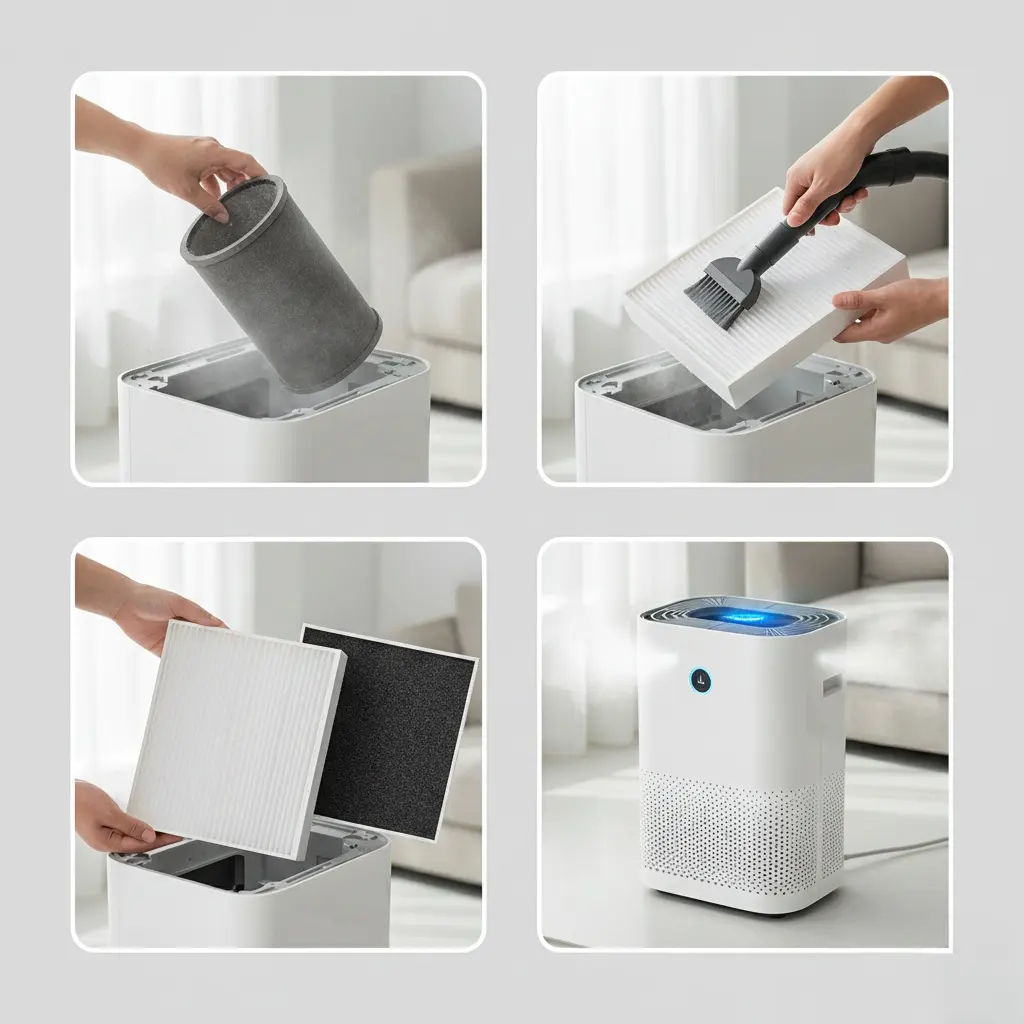
Beyond replacing the activated carbon filter on schedule, several maintenance practices can significantly extend your filter's effective lifespan and improve overall air purifier performance.
Pre filter maintenance (Critical): Most quality activated carbon air purifiers include a pre filter usually a mesh screen or foam layer that captures larger particles like dust, hair, and lint before they reach the main filters. Cleaning this pre filter regularly is one of the single most effective maintenance tasks you can perform.
Why pre filter maintenance matters :
- Prevents large particles from clogging activated carbon pores
- Maintains optimal airflow through the system
- Extends primary filter lifespan by 25-40%
- Costs nothing (most pre filters are washable and reusable)
How to clean pre filters :
- Check frequency : Every 2-4 weeks depending on air quality
- Remove carefully : Follow manufacturer instructions
- Vacuum first : Use soft brush attachment to remove loose debris
- Wash if washable : Rinse with cool water (no soap unless specified)
- Dry completely : Air dry for 24 hours before reinstalling (damp filters promote mold)
- Replace if damaged : Rips or tears reduce effectiveness
Additional maintenance tasks :
Exterior cleaning :
- Wipe down exterior surfaces monthly with slightly damp cloth
- Clean air intake and outtake grilles to prevent dust buildup
- Vacuum around vents using soft brush attachment
- Never use harsh chemicals or spray cleaners near intake vents
Sensor maintenance (for smart models) :
- Wipe particle sensors monthly with dry microfiber cloth
- Some sensors require calibration (check manual)
- Sensor accuracy directly affects auto mode performance
Fan and motor care :
- Listen for unusual noises (grinding, squealing) indicating bearing wear
- Most fans are sealed and require no maintenance
- Annual professional servicing for expensive units ($100-200) extends lifespan
Environmental optimization :
- Keep purifier away from direct heat sources (radiators, heating vents)
- Avoid placement in extremely humid areas (bathrooms) which accelerate saturation
- Maintain indoor humidity at 30-50% RH for optimal carbon performance
Ensuring Optimal Airflow and Strategic Placement
Where you place your activated carbon air purifier has dramatic impact on its effectiveness. Poor placement can reduce performance by 50-70%, essentially wasting your investment. Proper positioning ensures the unit can pull in contaminated air efficiently and distribute purified air throughout your space.
Optimal placement guidelines :
- Central location with 360° circulation
- Place in a spot where air can circulate freely around all sides
- Minimum 12-24 inches clearance on all sides (check manufacturer specs)
- Avoid corners, which create dead zones and poor circulation
- Never push against walls or furniture
2. Proximity to pollution sources
- Position near litter boxes (but not directly above, ammonia is hard for carbon to remove)
- Place in kitchen for cooking odors (but away from grease)
- Locate near smoker's usual spots
- Position near entryways in urban areas to catch outdoor pollution
3. Room air circulation patterns
- Place near return air vents to capture circulating air
- Avoid blocking air intake with curtains, plants, or furniture
- Position where ceiling fans or HVAC can help distribute purified air
- Higher placement (table/stand) often better than floor for gas mixing
4. Height considerations
- VOCs and odors mix throughout room air (not just floor or ceiling)
- Medium height (2-4 feet off ground) typically optimal
- Some gases (carbon monoxide) rise, others (formaldehyde) sink mid height.
- Follow manufacturer recommendations
5. Accessibility for maintenance
- Easy access to filters for regular checking and replacement
- Visible placement helps you remember to check indicators
- Avoid places where you'll forget about the unit
6. Room specific tips:
- Bedrooms : Place near bed but not directly blowing on you, run at lower speeds overnight
- Living rooms : Central position, higher speed settings when occupied
- Kitchens : Not too close to stove (grease clogs filters faster), away from direct steam
- Home offices : Under desk or nearby, lower speeds for quiet operation
- Basements : Combat mustiness with heavier carbon loads, manage humidity first
Common placement mistakes to avoid :
❌ Behind furniture or in closets (defeats purpose entirely)
❌ Direct sunlight exposure (degrades plastic housings, affects electronics)
❌ Extremely humid locations like bathrooms (saturates carbon quickly)
❌ Near pets or items it might knock over
❌ Blocking airflow with plants, picture frames, or décor
Airflow testing : Use a tissue or ribbon near intake and outtake vents. You should feel strong, consistent airflow. Weak airflow suggests:
- Blocked vents or grilles
- Saturated/clogged filters needing replacement
- Fan motor issues requiring service
- Improper placement restricting air access
Pro tip for larger spaces : If your room is significantly larger than the activated carbon air purifier's rated coverage, consider:
- Running at higher fan speeds (though noisier)
- Using two smaller units instead of one large unit
- Strategic placement to create air circulation patterns
- Combining with ceiling fans on low to distribute purified air
Proper placement and consistent airflow are absolutely essential. As one air quality expert puts it: "It's like trying to breathe with a blocked nose, it simply doesn't work as well." Give your activated carbon air purifier the space it needs to breathe, and it will reward you with significantly cleaner air.
2025 Maintenance Hacks for Peak Performance
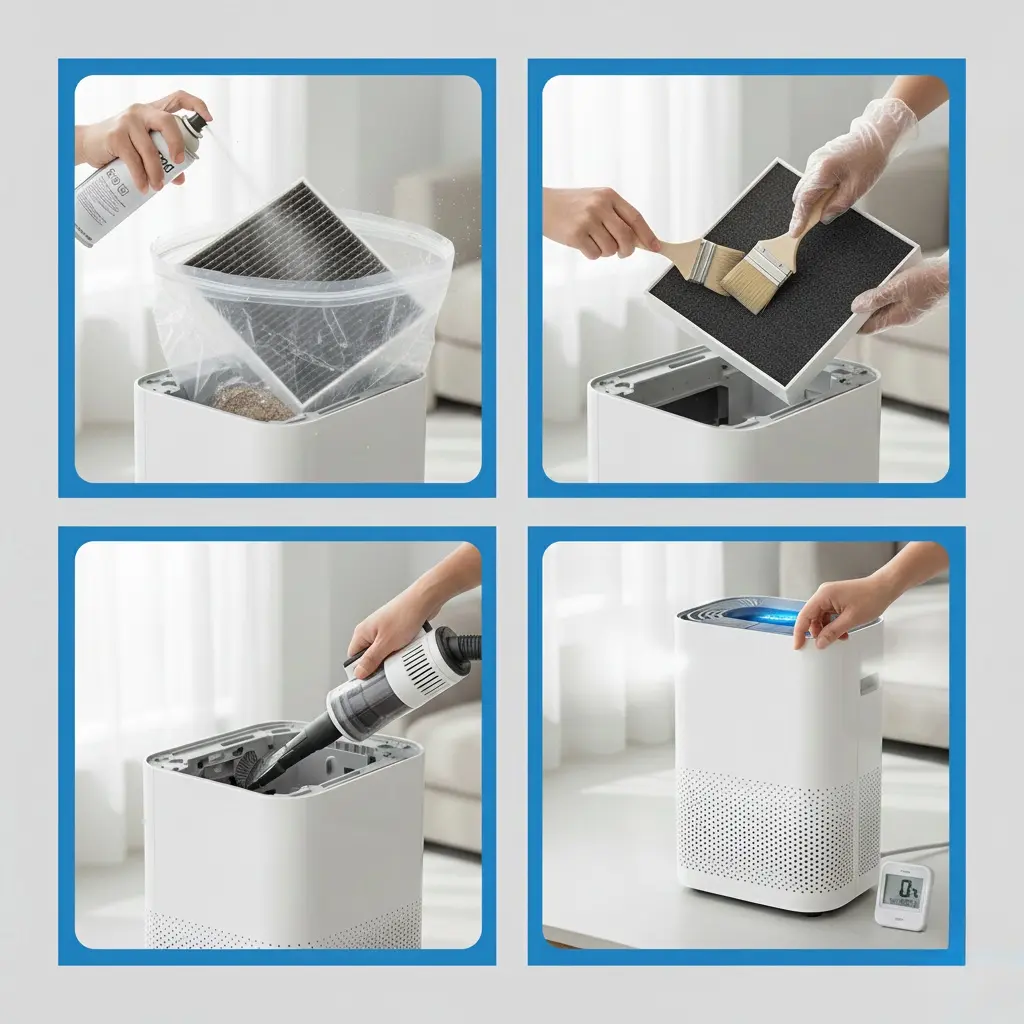
Modern activated carbon air purifiers have advanced significantly and these 2025 maintenance innovations can help you get maximum performance and value:
Smart Monitoring and Alerts
App based carbon saturation tracking :
- Dyson BP03 and Levoit EverestAir now include VOC sensors that provide 90% accuracy on actual filter saturation
- Apps track real time gas levels and predict optimal replacement timing
- Eliminates guesswork of time based replacement schedules
- Can save 15-25% on filter costs by not replacing prematurely
Carbon Saturation Check methods :
- Smart sensor monitoring : Most reliable, real-time VOC detection
- Filter timer : Basic but effective, tracks runtime hours
- Smell test : Subjective, if odors return, time to replace
- Manufacturer schedule : Conservative, always err on early side
Pre Filter Optimization
Vacuum bi weekly instead of monthly :
- AHAM 2025 studies show bi weekly pre filter vacuuming extends activated carbon filter life by 25%
- Takes only 2-3 minutes
- Prevents particulate clogging of carbon pores
- Particularly important in dusty environments or homes with pets
Upgrade to higher quality pre filters :
- Some manufacturers offer enhanced pre filters with better particle capture
- Consider aftermarket MERV-8 pre filters for superior protection
- Costs $10-20 but can extend carbon filter life by months
Eco-Friendly Disposal and Repurposing
Composting non recyclable carbon :
- Dreame introduces biodegradable carbon pellets that can be composted after saturation
- Reduces landfill waste by 40%
- Check local regulations, not all municipalities accept activated carbon in compost
- Non biodegradable carbon can still be used for odor control in:
- Trash cans (place saturated carbon in bottom)
- Refrigerators (absorbs food odors)
- Garages and workshops (controls paint/oil smells)
- Closets and shoes (moderate odor control)
Manufacturer take back programs :
- Austin Air and IQAir offer filter return programs in select markets
- Some retailers (Best Buy, Home Depot) now collect old filters
- Recycling activated carbon is complex but growing in availability
Humidity Management for Extended Filter Life
Optimal humidity range: 30-50% RH
- Use dehumidifier in humid climates or during summer
- Activate carbon performs 30-40% better in controlled humidity
- High humidity (>60%) causes water molecules to occupy adsorption sites, reducing VOC capture
Seasonal adjustments :
- Summer (humid) : Replace filters 25% more frequently, run dehumidifier
- Winter (dry) : Standard replacement schedule, carbon works optimally
- Monsoon season (Asia) : Consider pausing activated carbon use or dramatically increase replacement frequency
Energy Efficiency Maintenance
Keep filters clean for lower energy costs :
- Clogged pre filters force fan to work harder
- Can increase electricity consumption by 15-30%
- Clean airflow = efficient operation = lower bills
Optimal speed settings :
- Run on high when polluting events occur (cooking, smoking)
- Drop to low/auto mode overnight or when home is empty
- Reduces wear on fan motor and extends unit lifespan
Filter Life and Cost Over Time:Long Term Ownership Projection
Understanding the total cost of ownership for activated carbon air purifiers is crucial for making informed purchasing decisions. The initial purchase price is just the beginning, filter replacements and electricity costs accumulate significantly over the years.
5 Year Total Cost of Ownership Comparison :
5-Year Cost Breakdown (2025)
| Model | Unit Cost | Filter Cost | Electricity | Total (5 yrs) | Annual Avg |
|---|---|---|---|---|---|
| Austin Air HealthMate Plus | $650 | $63 (every 5 yrs = $126 ÷ 5) | $165 | $1,465 | $293 |
| IQAir HealthPro Plus | $1,200 | $75 (every 4 yrs) | $160 | $2,135 | $427 |
| Coway Airmega 400S | $550 | $150 (annual carbon + HEPA) | $85 | $1,635 | $327 |
| Levoit EverestAir | $400 | $120 (every 6 months) | $70 | $1,370 | $274 |
| Dyson BP03 | $180 | $80 (every 4 months) | $45 | $805 | $161 |
| Budget model (generic) | $120 | $60 (every 3 months) | $60 | $780 | $156 |
Core Analysis :
- Austin Air : Highest upfront cost but lowest annual operating cost due to infrequent filter changes
- IQAir : Premium price reflected in total cost, but justified for medical grade needs
- Coway : Best balance of efficiency and operating costs for most users
- Dyson : Lowest total cost but smaller coverage area and less carbon
- Budget models : Low purchase price but frequent filter changes negate savings over time
Cost per square foot of coverage: This metric reveals true value :
Cost per Square Foot (5-Year Ownership)
| Model | Total Cost (5 yrs) | Coverage (sq ft) | Cost per sq ft |
|---|---|---|---|
| Austin Air | $1,465 | 1,500 | $0.98 |
| Coway Airmega | $1,635 | 1,560 | $1.05 |
| Dyson | $805 | 860 | $0.94 |
Key takeaways :
- Premium models with longer filter life like Austin Air and IQAir provide better long term value despite higher upfront costs
- Budget models require such frequent filter replacements that they become expensive over time
- Mid range options like Coway and Levoit offer best balance for most households
Wrapping Up Your Air Quality Journey: Making the Smart Choice
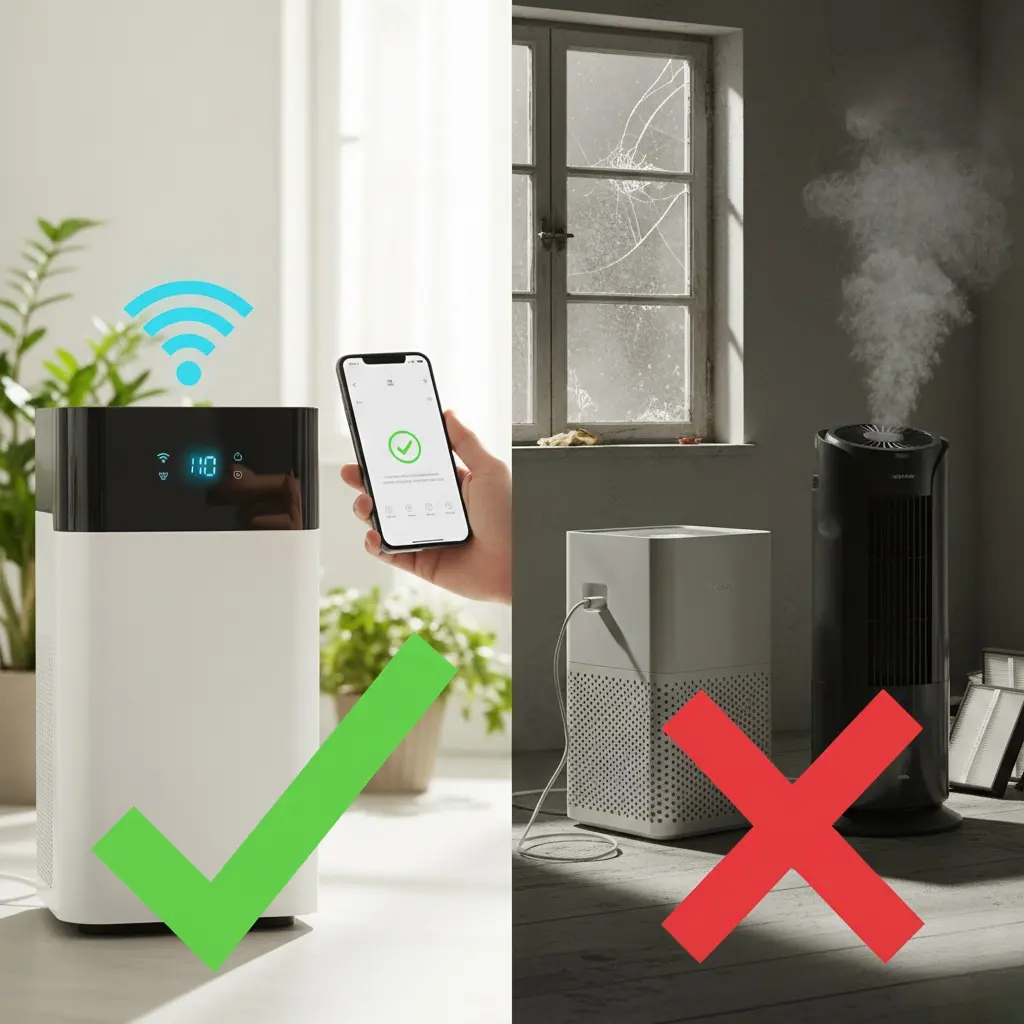
We've covered extensive ground in this comprehensive guide to activated carbon air purifiers. Let's bring it all together so you can make a confident, informed decision about improving your home's air quality.
The core message : Activated carbon air purifiers are uniquely effective at removing gases, VOCs, and odors that no other common filtration technology can touch. They work through adsorption, a scientific process where gas molecules bond to the massive internal surface area created by activated carbon's porous structure. With 500-3,000 square meters of surface area per gram, quality activated carbon acts like a molecular magnet for the airborne chemicals and smells that affect your home's comfort and your family's health.
But carbon alone isn't enough. The most effective air purification strategy combines activated carbon for gases and odors with HEPA filtration for particles and allergens. Hybrid systems address 95% of common indoor air pollutants, giving you truly comprehensive protection.
What matters most when choosing :
- Carbon amount : More is genuinely better, 8-15 lbs for serious air quality needs
- Room size matching : Proper CADR rating prevents wasted money on undersized units
- Form factor : Pelleted carbon outperforms mesh by 40% for sustained VOC capture
- Maintenance commitment : Budget for 3-6 month filter replacements (non-negotiable)
- Specific needs alignment : Match your pollution type to the right carbon treatment (standard, impregnated with zeolite)
The investment pays off : Users consistently report dramatic improvements in home comfort, reduced allergy and asthma symptoms, better sleep quality, and genuine peace of mind knowing their families breathe cleaner air. For people with chemical sensitivities, the right activated carbon air purifier can be truly life changing.
Remember these critical points :
- Not all "activated carbon" filters are equal, carbon amount and quality matter enormously
- You cannot wash or reactivate carbon filters at home, replacement is mandatory
- Standard carbon doesn't remove formaldehyde well, you need impregnated carbon
- Particles (dust, pollen, dander) require HEPA filters, carbon doesn't touch them
- Proper placement and maintenance determine whether you get 90% effectiveness or 30%
Start here : Identify your primary air quality concern (odors, chemicals, smoke, or comprehensive cleaning), match it to the appropriate activated carbon amount and filter type, ensure the coverage matches your space and commit to the ongoing maintenance and filter replacement schedule.
Picking the right activated carbon air purifier means you can breathe a little easier, knowing you're doing something genuinely effective for your indoor air quality and your family's wellbeing. The technology works, the science is proven, and the results are measurable, you just need to choose wisely and maintain properly.
Clean air isn't a luxury, it's a fundamental component of healthy living. Your activated carbon air purifier is a powerful tool in achieving that goal.
Frequently Asked Questions About Activated Carbon Air Purifiers
Frequently Asked Questions About Activated Carbon Air Purifiers
Activated carbon is charcoal that has undergone special high-temperature treatment (600-1200°C) to create an incredibly porous structure. This process creates millions of microscopic pores that give the carbon 500-3,000 square meters of internal surface area per gram—equivalent to 2-6 tennis courts in a space the size of a sugar cube.
These countless tiny pores grab onto smelly molecules and harmful gases through a process called adsorption. Unlike absorption (where something soaks in), adsorption means the bad stuff sticks to the carbon's surface. As air passes through the activated carbon filter in your purifier, gas molecules and VOCs bond to the carbon surface, effectively being removed from the air you breathe.
Activated carbon air purifiers excel at removing:
Common household odors:
- Cooking smells (fish, garlic, curry, fried foods)
- Pet odors (urine, wet dog, litter box)
- Tobacco and cigarette smoke
- Bathroom and sewer gases
- Musty basement smells
- Body odors and gym clothes
Harmful chemicals and VOCs:
- Benzene (from tobacco smoke, stored fuels, paint)
- Toluene (from paint thinners, nail polish, adhesives)
- Xylene (from paints, varnishes)
- Cleaning product fumes
- Air freshener chemicals
- Paint and varnish off-gassing
- New furniture and carpet odors
Performance: Quality activated carbon filters (8+ lbs) remove 80-90% of these pollutants. Budget models with minimal carbon (<3 lbs) remove only 50-60%.
The amount of activated carbon directly determines both performance and filter lifespan. Here's what you need:
By intensity of problem:
- Light odor control (occasional cooking, no pets): 2-4 lbs adequate
- Moderate needs (regular cooking, 1-2 pets): 5-8 lbs recommended
- Heavy duty (smoking, multiple pets, chemical sensitivity): 10-15+ lbs required
- Extreme cases (post-fire, industrial nearby): 15-20 lbs specialist filters
Cheap purifiers often contain just 1-2 lbs of thin carbon mesh, which is completely inadequate for meaningful odor removal in most homes. Look for models that clearly specify carbon weight in pounds (lbs) or kilograms (kg) and prefer pelleted carbon over mesh.
No, and this is critical to understand. Activated carbon filters have significant limitations:
What carbon CANNOT remove:
- Particles: Dust, pollen, pet dander, mold spores (you need HEPA for these)
- Formaldehyde: Standard carbon removes only 20-40% (needs impregnated carbon)
- Ammonia: <30% removal (needs zeolite additives)
- Carbon monoxide: Zero protection (install CO detectors instead)
- Radon: No removal capability (needs specialized mitigation)
- Wildfire ash/particles: Carbon gets the gases, but particles need HEPA
This is why hybrid systems combining activated carbon + HEPA filters are ideal for comprehensive air purification. The carbon handles gases and odors while HEPA captures particles.
Replacement frequency:
- Standard home use: Every 3-6 months
- Heavy pollution (smoking, urban, multiple pets): Every 2-3 months
- Light use (low pollution, small space): Every 6-9 months
- Premium high-capacity filters: Some last 12+ months (Austin Air, IQAir)
Critical fact: You cannot clean or reactivate carbon filters at home. Despite what some sources claim, washing, vacuuming, baking, or sun-drying does NOT restore adsorption capacity. Professional reactivation requires 800°C+ temperatures in controlled conditions—completely impractical for residential use.
Signs replacement is needed:
- Odors start returning despite purifier running
- Manufacturer's timeline has elapsed
- Air quality doesn't feel as fresh
- Filter indicator light activates (on smart models)
Budget for replacements: $20-200 per filter depending on model. This is a non-negotiable ongoing cost.
Strategic placement dramatically affects performance:
Optimal positioning:
- Central location: Place where air can circulate 360° around the unit
- 12-24 inches clearance: Keep all sides clear of walls, furniture, curtains
- Near pollution sources: Position near litter boxes, smoking areas, kitchens
- Medium height: 2-4 feet off ground typically optimal (gases mix throughout room)
- Easy access: You need to check and replace filters regularly
Avoid these mistakes:
- Corners or behind furniture (blocks airflow)
- Direct sunlight (degrades plastics and electronics)
- Bathrooms or very humid areas (accelerates saturation)
- Against walls or in closets (defeats the purpose)
Room-specific tips:
- Bedrooms: Near bed, lower speed for quiet sleep
- Kitchens: Away from stove grease, medium distance from cooking area
- Living rooms: Central position, visible so you remember maintenance
Standard activated carbon: Only 20-40% formaldehyde removal
Formaldehyde is notoriously difficult for regular activated carbon to capture effectively. However, specially treated "impregnated carbon" filters can remove 70-85% of formaldehyde.
What you need for formaldehyde:
- Impregnated carbon treated with potassium permanganate (KMnO4) - found in Austin Air HealthMate 2025 model, IQAir GC MultiGas
- Specialized formaldehyde filters - some manufacturers offer specific add-ons
- Zeolite additions - Austin Air includes this
If new furniture, renovation, or construction formaldehyde is your primary concern, don't buy a standard activated carbon air purifier. Invest in a model specifically rated for formaldehyde removal, or you'll be disappointed with results.
Both are premium options but serve slightly different needs:
Austin Air HealthMate ($650-700):
- Carbon: 15 lbs (highest residential amount) + zeolite
- Coverage: 1,500 sq ft
- Best for: Heavy smoke, maximum odor removal, budget-conscious premium choice
- Filter life: 5 years (longest in industry)
- Made in: USA (Buffalo, NY)
- Warranty: 5 years
- Advantage: Most carbon, longest filter life = lowest operating cost over time
IQAir HealthPro Plus ($1,200):
- Carbon: 5.5 lbs V5-Cell (impregnated with KMnO4)
- Coverage: 1,125 sq ft
- Best for: Medical-grade needs, formaldehyde removal, chemical sensitivity, maximum filtration quality
- Filter life: 4 years
- Made in: Germany (Swiss designed)
- Warranty: 10 years
- Advantage: HyperHEPA particle filtration, German engineering, best for medical needs
Bottom line:
- Choose Austin Air if: You need maximum odor removal, long filter life, best value
- Choose IQAir if: You have chemical sensitivity/MCS, need formaldehyde removal, want absolute premium quality, have medical air quality needs
Both significantly outperform budget and mid-range options for activated carbon air purification.
Yes, but only partially—you need BOTH carbon and HEPA.
Wildfire smoke contains two components:
- Particles (ash, soot, PM2.5) = 60% of smoke pollutants
- Gases (VOCs, irritants, odor) = 40% of smoke pollutants
How each filter helps:
- Activated carbon: Removes the gaseous irritants and smell (40% of the problem)
- HEPA filter: Removes the dangerous particles (60% of the problem)
For wildfire protection, you MUST have hybrid carbon + HEPA system:
- Coway Airmega 400 (8.8 lbs carbon + Max2 HEPA)
- Austin Air HealthMate (15 lbs carbon + true HEPA)
- IQAir HealthPro Plus (5.5 lbs carbon + HyperHEPA)
Using only activated carbon for wildfire smoke leaves you unprotected against the most dangerous particulate component. Using only HEPA leaves your home smelling like smoke. The combination is essential.
Activated carbon filters themselves are completely safe and produce zero ozone or harmful byproducts. The adsorption process is purely physical/chemical bonding with no electrical discharge or chemical reactions that generate pollutants.
However, beware of purifiers marketed as "activated carbon" that include:
- Ionizers: Can produce ozone as byproduct (respiratory irritant)
- Photocatalytic oxidation (PCO): May generate formaldehyde and other compounds
- Ozone generators: Extremely dangerous, avoid entirely
How to ensure safety:
- Look for CARB certification (California Air Resources Board) - ensures no ozone generation
- Avoid units with "ionizer" or "plasma" functions unless you can disable them
- Choose pure HEPA + activated carbon combinations without gimmicky add-ons
- Reputable brands (Austin Air, IQAir, Coway, Levoit) use safe mechanical filtration only
Pure activated carbon filtration is one of the safest air purification technologies available.